
How to present a proposal: the five-second summary
Ready to go digital?
Discover how Zoomforth can help you.
Join 500+ enterprise sales, marketing and HR teams building trackable microsites — no developer needed.
Rated 4.76/5 on G2 · Trusted by Fortune 500 teams
Thanks — we've got your request.
Check your inbox — Wendie has sent her calendar link.
While you wait, browse real microsites in our microsite inspiration gallery or learn the basics in the Zoomforth Academy.
Present the buyer's problem, not your product. Walk through the proposal as a story, not a document. Reserve time for real conversation. Close with a specific next step, not an open-ended "let us know". Send an interactive follow-up the same day, built with interactive proposal software so you can see who opened it.
Everything else in this guide is an elaboration of those five principles, whether you are working out how to present a business proposal to one buyer or to a full buying committee. The teams that lose deals at the proposal stage are usually doing the opposite of at least one of them.
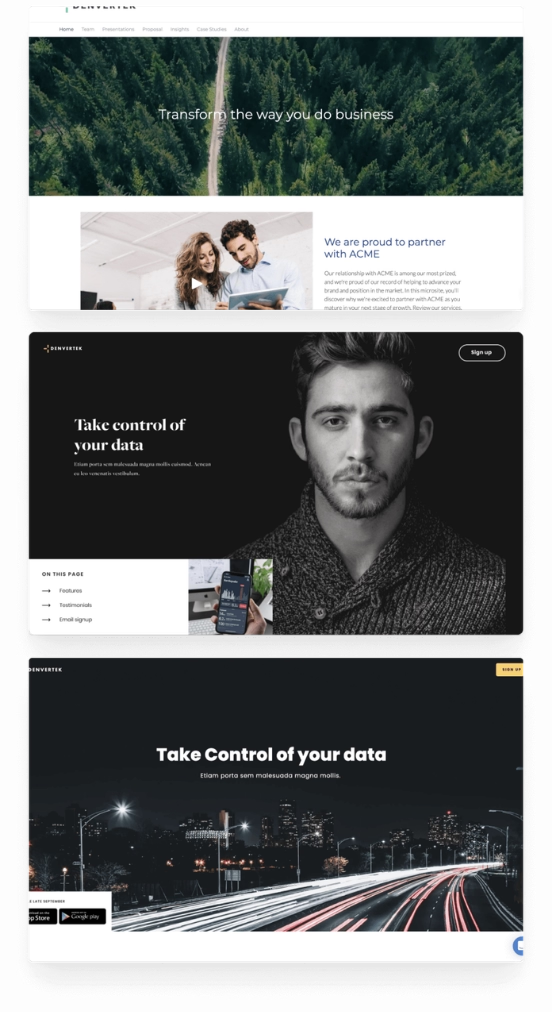
Before the meeting: how to create a proposal presentation that lands
Most proposal presentations are lost before the first slide appears. The preparation determines whether you are walking into a conversation or a formality, so the proposal presentation tips below start there.

Confirm who will be in the room
Find out exactly who will attend — titles, roles, and their level of involvement in the decision. A CFO and a VP of Sales need to hear different things from the same proposal. If you do not know who is attending, ask. Walking in expecting a technical audience and finding the C-suite is the most common and most avoidable preparation failure. Presenting a proposal to management is a different meeting from presenting it to the team that will use the product: executives want the outcome, the cost, and the risk in the first five minutes.

Map stakeholders to sections
Review your proposal and note which sections are most relevant to each attendee. The executive summary is for everyone. The technical architecture section is for IT. The pricing section is for finance. Plan to navigate through the proposal with each audience in mind, and brief the room on which sections you will cover in depth versus which you will reference briefly.

Anticipate the three most likely objections
Every deal has three objections that will come up in the presentation. For most enterprise B2B deals these are: price, implementation complexity, and competitive differentiation. Prepare a one-minute answer to each that does not sound rehearsed. If you have addressed the objection in the proposal itself, know where to find it so you can redirect the buyer there in real time.

Agree on a next step before you walk in
Know the specific action you want the buyer to take at the end of the presentation — a signed order form, a security review call, a reference check, a procurement submission. The close you propose in the meeting should not be a surprise. The best account teams align on next steps with their internal champion before the meeting begins.
During the meeting: how to walk through your proposal
The structure of a winning business proposal presentation is consistent regardless of the industry or the deal size. If you are working out how to make a business proposal presentation from scratch, start with these seven steps: they separate the presentations buyers remember from the ones they forget before they leave the room.
| Step | What to do | Time allocation |
|---|---|---|
| 1. Open with the problem | Restate the buyer's business challenge in their own language. Not your pitch — their problem. This proves you listened in discovery. | 3–5 min |
| 2. Set the agenda | Tell the room what you will cover, in what order, and when you plan to stop for questions. This signals confidence and respects their time. | 1–2 min |
| 3. Present your solution | Walk through the relevant sections of your proposal. Narrate, do not read. Connect each section back to the problem you named at the start. | 15–20 min |
| 4. Show your evidence | Reference one or two case studies that are directly relevant to this buyer — same industry, similar challenge, measurable outcome. | 5 min |
| 5. Address pricing directly | Present pricing as a business decision, not an afterthought. Frame it in terms of the outcome delivered, not the cost per seat or module. | 5 min |
| 6. Reserve time for questions | Stop 15 minutes before the end and explicitly invite questions. This is not Q&A — it is a structured conversation that gives you signal on where objections live. | 15 min |
| 7. Close with a specific next step | Propose one clear, time-bound action. "I will send you a revised proposal by Thursday" or "Can we schedule the security review for next week?" Not "let us know if you have questions". | 2 min |
Narrate, do not read
The fastest way to lose a room is to read your proposal aloud. The buyers can read faster than you speak, and they can read a document on their own time. What they cannot get from the document alone is your judgement, your conviction, and your ability to make the case in conversation.
Use the proposal as a visual anchor — it shows structure and builds confidence — but tell the story in your own words. If you find yourself reading a paragraph, stop. Paraphrase it instead.

Invite questions at each section, not just at the end
Reserving all questions for the end is a common mistake. It builds tension, and it means that a buyer who stops following you at slide three stays confused for the rest of the presentation. Instead, pause at the end of each major section: "Before I move on — any questions about the implementation timeline?"
Frequent, structured pauses make the buyer feel heard, surface objections early when you can address them, and dramatically improve how much of your proposal is actually understood and retained.
After the meeting: follow-up that closes the loop
The meeting ends. The deal usually does not. The follow-up is where the majority of B2B proposal decisions are actually made — in the conversations the buyer has internally after you leave the room. Your follow-up needs to support those conversations.

Follow up within 24 hours
Send a follow-up within one business day — ideally the same afternoon. The longer you wait, the more the energy from the meeting dissipates. The follow-up should summarise what was covered, confirm the agreed next steps, and provide a link to the proposal so the buyer can share it internally without having to ask you for it again.
Address objections raised in the meeting
If pricing, the implementation timeline, or a specific technical concern came up in the meeting, address it directly in the follow-up — not in a separate email three days later. Include a short, written response to each objection raised and, where relevant, update the proposal itself to reflect exactly what was discussed in the room.

Send a trackable version of the proposal
After the presentation, the proposal continues its life inside the buyer's organisation. You need to know what happens next. A trackable proposal — one that shows you who opens it, what sections they re-read, and whether new stakeholders have joined the evaluation — gives you the intelligence to time your follow-up calls and understand where the deal stands without having to guess.

Propose a specific next date
Every follow-up should end with a proposed date for the next interaction — not "let us know when works for you". A concrete, specific suggestion ("Are you available for a 30-minute check-in on Thursday?") shifts the default from inaction to action. The buyer can always propose an alternative, but the conversation keeps moving forward rather than stalling in an open-ended waiting period where deals go cold.
The biggest mistakes that lose deals at the proposal stage
Most failed proposal presentations fail in the same predictable ways. Recognising these patterns is the first step to avoiding them.
Leading with company history
Opening a proposal presentation with "Let me tell you a bit about us" is the single most common and most costly mistake. Buyers do not care about your company's founding story at the start of a proposal meeting. They care about whether you understand their problem. Lead with the problem, every time.
Not adapting for the room
Walking into a meeting with a CMO, a CTO, and a VP of Procurement and delivering the same presentation you would give to a single technical buyer is a missed opportunity at best and a lost deal at worst. Different stakeholders need different emphasis. Adapt on the fly if the room is not what you expected.
Avoiding the pricing conversation
Many sales reps bury pricing, present it apologetically, or try to rush past it. Buyers notice. Presenting pricing with confidence — framed around the outcome it delivers and the risk it eliminates — signals that you believe in the value of your proposal. Apologising for the number does the opposite.
Ending without a next step
"We will follow up" is not a close. Neither is "let us know if you have any questions". End every proposal presentation with a specific proposed next action, a named date, and confirmation of who owns it. If the buyer leaves the room without knowing what happens next, they will fill that gap themselves — usually by slowing the process down.
Why interactive proposals beat static decks
A PDF or a PowerPoint deck is a snapshot. Once sent, it cannot be updated, it cannot be tracked, and it cannot adapt to what the buyer is actually reading. Enterprise sales teams are replacing static proposals with interactive microsites — and winning more deals as a result.
Know who read what
An interactive proposal shows you which stakeholders opened it, which sections they spent the most time on, and whether they returned for a second look. This intelligence changes every follow-up conversation — instead of guessing where the buyer's concerns are, you know.
Update after you send
When the buyer raises a pricing concern in the meeting, you can update the proposal the same afternoon and the link you already sent them reflects the change. No re-sending, no version confusion, no risk of the buyer reviewing an outdated document when they share it internally.
Works on any device
A proposal microsite works on a phone, a tablet, and a desktop without formatting issues. Buyers often review proposals during commutes or between meetings on a mobile device — a PDF that requires zooming and scrolling is a friction point that a microsite eliminates entirely.
Secure and access-controlled
Enterprise proposals contain commercially sensitive information. An interactive proposal can be password-protected, restricted by email domain, or secured with SSO — ensuring that only the intended stakeholders can access it, and that you maintain full control even after the document has been shared internally.
Build proposal microsites that win deals
Zoomforth replaces static PDFs and PowerPoint decks with interactive, trackable proposals that you control — from first send to signed contract. See it in a 30-minute demo.
Request a demo
Frequently asked questions about presenting a proposal
How do you start a proposal presentation?
Start with the buyer's business problem in their own words, not your company background. Restate the challenge you heard in discovery, confirm the outcome they want, then set the agenda: what you will cover, in what order, and when you will stop for questions. Knowing how to start a proposal presentation matters more than any slide that follows, because the first five minutes decide whether the room listens as a buyer or as an audience. For what goes into the document itself, see how to write a sales proposal.
How do you present a proposal effectively?
An effective proposal presentation starts before the meeting: confirm the attendees, tailor the narrative to each stakeholder's priorities, and anticipate the three most likely objections. During the meeting, open with the business outcome rather than the product, walk through the proposal as a story rather than a document, and pause after each major section to invite questions. Close with a clear, time-bound next step.
What should a proposal presentation include?
A proposal presentation should include an executive summary of the business problem and your proposed solution, a scope of work or solution breakdown, your evidence of capability (case studies, references, relevant experience), pricing and timeline, and a clear call to action. The sequence matters: lead with the problem and the outcome, not with company background or feature lists.
How long should a proposal presentation be?
Most B2B proposal presentations work best at 30–45 minutes, with 15–20 minutes reserved for questions. A tightly structured 30-minute presentation will almost always outperform a 60-minute one — buyers lose attention after the first 20 minutes unless the content is continuously relevant to them.
What are the most common proposal presentation mistakes?
The most common mistakes are: leading with company history instead of the buyer's problem; reading slides aloud instead of telling a story; not confirming who will attend and adapting for multiple stakeholders; failing to address pricing head-on; and ending without a specific next step. The single biggest mistake is treating the presentation as a recitation of the document rather than a conversation about the buyer's decision.
How do you follow up after a proposal presentation?
Follow up within 24 hours with a written summary of what was covered, the agreed next steps, and a link to the proposal (or an updated version that reflects any questions raised in the meeting). The follow-up is also the moment to send a proposal microsite — an interactive, trackable version of your proposal that lets you see which sections the buyer reviews after the meeting.
Related resources
RFP response guide
Everything B2B sales teams need to know about RFPs — structure, format, and how to submit a winning response that stands out from static PDF bids.
Proposal templates
Ready-to-use proposal templates for enterprise B2B sales teams — organised by deal type and use case, from initial pitch to formal submission.
Sales microsite examples
Browse real interactive proposals, RFP responses, and account portals built with Zoomforth — with analysis of what makes each one work.