
At a time when competition for clicks is at an all-time high, having a well-crafted PPC landing page is essential for any successful ad campaign. The landing page is the first page that a visitor sees after clicking on an ad, and it’s where they decide whether to stay or click away. So, PPC landing page design is critical, and a good landing page should be enticing and provide relevant content to the visitor.
That’s why having the right PPC landing page template is so important. A template simplifies the process of creating landing pages for PPC that are attractive and informative. It eliminates the need to create custom content or design a page from scratch. Here is some helpful information about creating effective PPC landing pages and how to use the best landing page template to meet your goals.
Ready to go digital?
Discover how Zoomforth can help you.
Join 500+ enterprise sales, marketing and HR teams building trackable microsites — no developer needed.
Rated 4.5/5 on G2 · Trusted by Fortune 500 teams
What makes a good PPC landing page template?
A PPC (pay-per-click) landing page is a webpage designed to capture leads from paid search campaigns. You pay for each click you get, as the name suggests.
Users are directed to an independent webpage following their interaction with a pay-per-click advertisement. This landing page layout is designed to be the first page a user sees when clicking on an ad, and typically includes a form for capturing contact information or converting visitors into customers. Because they are such strong lead capture and conversion tools, you should be sure to include a strong and concise call to action.
The design of a landing page is especially important here because you have (on average) less than 10 seconds to communicate value to visitors before they abandon your site. The right template can help you reap the benefits of your PPC landing page. A well-designed landing page should be engaging and designed with easy navigation in mind to drive conversions.
Your PPC landing page should be optimized for desktop and mobile
Did you know that nearly 60% of web traffic comes from mobile devices like phones and tablets? A mobile-friendly landing page is no longer exceptional; for most web users, it’s an expectation.
Mobile-friendly landing pages are an essential part of ensuring that your PPC landing pages are driving conversions and getting in front of a range of users. Before you ask, no, being able to open a webpage on your phone is not enough to call it mobile-friendly. A mobile-friendly webpage is easy to view and navigate on your phone with little manipulation needed (like excessive zooming or scrolling).
This gives users a positive experience no matter how they view your content, so ensure that the template you use is fast-loading and responsive to mobile users. Creating a PPC landing page that can be opened on a range of devices not only helps with lead capture but also helps to improve search engine rankings, as search engines prioritize mobile-friendly websites.
The landing page layout should be designed with PPC in mind
If you are paying for your PPC landing page to be integrated with your advertising budget, you should ensure that it follows the best practices for PPC landing pages to narrow your funnel and convert leads.
Any landing page that is looking to increase SEO and make itself navigable should have clear, concise, and action-packed headlines and subheadings. This makes it easy for users to skim your landing pages, which research has shown is the preferred reading method for an overwhelming majority of web users. Be sure that your headlines, subheadings, and meta descriptions are all relevant to your content, or you may see a high bounce rate.
Coupling your headlines and subheadings with CTAs maximizes the opportunity for you to drive action on your PPC landing page. Calls to action should be specific to a targeted action you want your users to take. The more specific your CTA, the better.
Finally, don’t overlook the importance of the PPC landing page’s design! Designing your PPC landing pages with navigability in mind is an important part of seeing results from your PPC campaigns. The easier your landing page is to navigate, the more likely it is that users will take action. Design can affect bounce rates and the likelihood that users will engage with CTAs.
A microsite is better for longer campaigns than PPC landing pages
While landing pages are great conversion tools that have narrow funnels, they may be too narrow in scope for some content or projects. This is especially true if your target audience is still looking to explore the details of your product or service. On the other hand, directing those “in-between” users back to your website may not be tailored enough, resulting in site visits that don’t convert.
The happy middle ground between a landing page and a website is a microsite. It is still narrow enough in its approach that content is tailored for specific campaign purposes, but includes the same rich elements of a website so you can create content for a longer-lasting, more substantial campaign.
Microsites are fully immersive content experiences that have their own unique URL and subpages. This increases SEO visibility while allowing your content to become as a niche to your campaign as you’d like without sacrificing the consistency of your branding efforts.
The beauty of a microsite is that it also offers the flexibility of incorporating more conversion-driving elements than a standalone landing page. You can incorporate contact forms, more CTA buttons, and engaging media content that would otherwise clutter a single landing page.
Best PPC landing page templates you can use
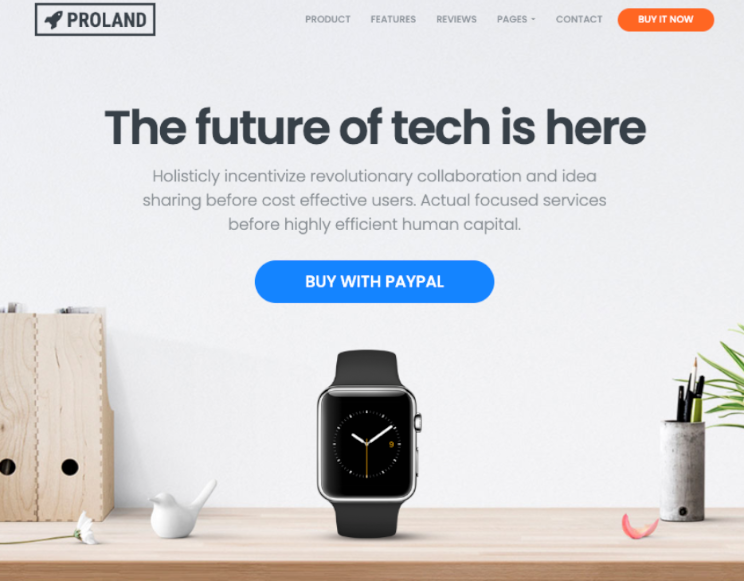
The simple, clean text takes the center stage here with a clear CTA that is housed inside of a button feature. This makes it easy for your visitors to focus on what matters most: the featured product. This template also features a neat scroll feature that moves across new sections that contain their own CTAs so you can convert across the entirety of your landing page.
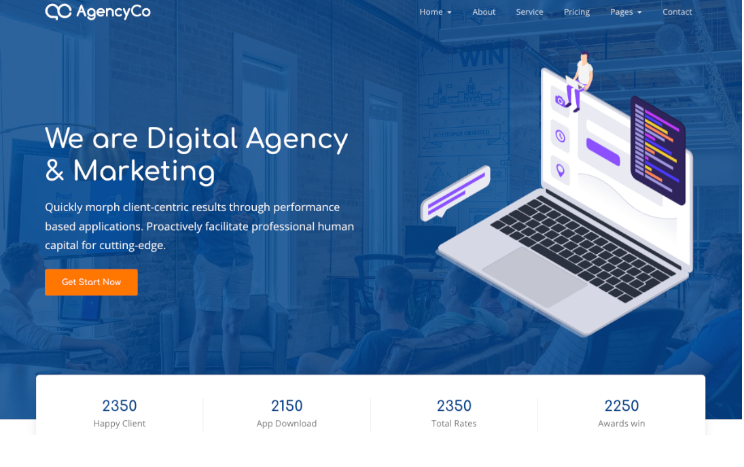
The playful rounded font is only the start of this playful template that includes animated graphics and plenty of opportunities to incorporate other media. We love that the bottom of the template includes space for other metrics that can convert leads, too!

We love that this template is image-forward. It is the perfect way to highlight a product or branding image that grabs users’ attention. The large heading is accompanied by a short text block, which makes it easy to jump right to the CTA down below.
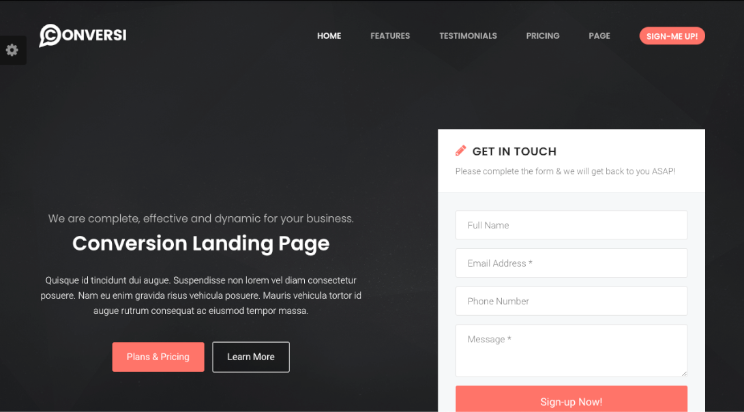
Tried and true works, too! This simple landing page starts working on converting leads right away with a contact form and CTA button front and center. The stark contrast between the CTAs and the plain background immediately moves eyes toward lead conversion elements.
What to look for when choosing a PPC landing page template
The templates above are starting points, not finished pages. When you evaluate any PPC landing page template — from these or anywhere else — judge it against the criteria that actually move ad-spend efficiency:
Message-match flexibility. Your ad promised something specific. The template’s headline area needs to be prominent and easy to edit so the landing page can echo the exact language of the ad that sent the visitor there. A mismatch between ad and page is the fastest way to burn clicks — the visitor’s confidence drops the instant the page doesn’t confirm what they clicked for.
Above-the-fold conversion path. Because you have under 10 seconds, the headline, value proposition, and primary CTA (or form) all need to be visible without scrolling. A template that pushes the form below a tall hero section is working against your paid traffic.
Speed and mobile responsiveness. Load time directly affects both conversion rate and your Google Ads Quality Score, which in turn affects what you pay per click. A slow or clunky-on-mobile template costs you twice: fewer conversions and a higher cost per click for the same ad.
One goal, no leaks. The template should have no site navigation, no footer full of links, and room for exactly one repeated CTA. Every additional exit is a way for expensive traffic to leave without converting.
Built-in room for proof. A template with a natural place for a logo bar or a testimonial near the CTA converts better than one that’s all headline and form, because paid visitors are usually colder than organic ones and need more reassurance.
Why message match matters more for PPC than for organic
Organic visitors arrive after choosing to click a search result they read carefully. PPC visitors arrive from an ad they may have clicked on impulse — which means the landing page has to re-earn their attention immediately. This is why message match is the single highest-leverage lever in PPC landing page design.
If your ad headline is “Cut proposal turnaround time in half,” the landing page headline should say something very close to that — not “Welcome to Zoomforth” or “The content experience platform.” When the page confirms the ad’s promise in the first line, the visitor relaxes and keeps reading. When it doesn’t, they bounce, and you’ve paid for a click that produced nothing.
The practical implication: don’t build one PPC landing page for all your ads. Build a variant per ad group (or at least per core message), each matching its ads’ language. A template that’s fast to duplicate and re-headline — rather than one that requires a rebuild for each campaign — is what makes this practical at scale.
Go beyond PPC Ad landing pages with Zoomforth microsites
Landing pages are vital to PPC campaigns, but if you’re looking to do more, creating a rounded, hyper-focused experience is easy with a microsite. However, not all microsite tools are the same!
Zoomforth makes it easy to create a microsite that is as tailored as a standalone landing page with the full features and tools of a website. Drag-and-drop editing tools make it easy to create content from a template that is fully customized with your own branding and graphics. Zoomforth also has in-depth insight and analytics tools that let you track and measure the success of your microsite.
Ready to get more from your ad spend? Request a demo to see how Zoomforth microsites convert PPC traffic.
Photo by Austin Distel on Unsplash
Frequently asked questions
What makes a good PPC landing page?
A good PPC landing page loads fast, works on mobile, and matches the promise of the ad that sent the visitor there. It has one clear call to action, concise skimmable headlines, and no navigation that lets the visitor wander away from converting. You have less than 10 seconds to communicate value before most visitors leave.
What should a PPC landing page template include?
A strong PPC landing page template includes a headline that matches the ad, a single focused call to action, a lead capture form, social proof, and a responsive layout optimized for both desktop and mobile. Everything on the page should push toward one conversion goal.
Is a microsite better than a PPC landing page?
A single landing page is ideal for a narrow, short-lived campaign with one conversion goal. A microsite is better for longer campaigns or when buyers want to explore before converting, because it offers multiple subpages, richer media, and more conversion points while keeping the tailored focus of a landing page.
How long do you have to convert a PPC visitor?
Research from the Nielsen Norman Group shows users decide whether to stay on a page in under 10 seconds. For paid traffic, that means your headline, value proposition, and call to action must be visible and compelling above the fold.