What a business proposal is and when you need one
Ready to go digital?
Discover how Zoomforth can help you.
Join 500+ enterprise sales, marketing and HR teams building trackable microsites — no developer needed.
Rated 4.76/5 on G2 · Trusted by Fortune 500 teams
Thanks — we've got your request.
Check your inbox — Wendie has sent her calendar link.
While you wait, browse real microsites in our microsite inspiration gallery or learn the basics in the Zoomforth Academy.
A business proposal is a formal document that presents a specific solution to a defined problem or opportunity — and argues why your company is the right one to deliver it. In B2B sales, proposals bridge the gap between initial interest and a signed contract. They are used whenever the buyer needs more than a price: they need to understand the approach, the scope, and the value before they commit.
Business proposals fall into two categories. A solicited proposal is written in response to a direct request — a formal RFP, an informal ask after a discovery call, or a structured procurement process. An unsolicited proposal is sent proactively, without a specific request, to introduce a solution the sender believes the prospect needs. Solicited proposals are more common in enterprise sales; unsolicited ones appear more in account-based outreach or early-stage business development.
A proposal differs from a quote in scope and intent. A quote gives a price for a defined piece of work. A proposal gives a price and argues for why that work, at that price, with that team, is the right investment for this buyer's specific situation. On complex or high-value deals, the proposal is where it is won or lost.

A proposal is not a price list. It is an argument. The most important question it answers is not "how much?" but "why you?"
The 10 sections every business proposal needs
The best proposals follow a predictable structure because buyers are evaluating multiple vendors at once. A consistent structure reduces cognitive load and makes it easier for your champion to advocate for you internally. Here are the ten sections that belong in every serious B2B proposal, in order.
| Section | What it does | Common mistake |
|---|---|---|
| 1. Cover page | Sets the professional tone. Includes your company and the prospect's company, proposal date, and a clear title. | Generic title ("Proposal for Services") instead of one tied to the buyer's specific goal. |
| 2. Executive summary | Written for the decision-maker who will skim the whole document. Makes the case in half a page: problem, solution, expected outcome, ask. | Writing it last-minute as a table of contents. It should stand alone as a pitch, not a summary. |
| 3. Problem statement | Shows the buyer you understand their specific situation, not just the category of problem. Creates relevance and earns the reader's attention. | Using boilerplate text reused across every proposal. If the buyer's name swaps out in 30 seconds, it isn't personalized. |
| 4. Proposed solution | Explains what you will do, how, and why this approach solves the stated problem. This is where differentiation lives. | Describing the product instead of the solution. The buyer cares about outcomes, not feature lists. |
| 5. Scope of work | Lists specific deliverables, milestones, and exclusions. Reduces scope-creep disputes after the deal is signed. | Leaving scope vague to avoid "scaring off" the buyer. Vague scope creates renegotiation problems later. |
| 6. Timeline | Sets expectations for delivery and shows the buyer what their life looks like after they say yes. | Providing a start date and end date with no milestones in between. Buyers need to see progress markers. |
| 7. Pricing | States the investment clearly, broken down by scope element or phase. Frame total value before total cost. | Burying the pricing table in an appendix. If the buyer has to search for the price, they lose trust. |
| 8. About us and team | Proves your capability with relevant credentials, case studies, and the specific people who will do the work. | Providing a generic company overview. Name the people and their specific relevant experience. |
| 9. Social proof | A short case study, a relevant client reference, or a specific metric from a comparable engagement. | Using logos alone. "We work with Fortune 500 companies" without an outcome metric is marketing, not proof. |
| 10. Next steps | Tells the buyer exactly what to do next: one specific, time-bound action. | Ending with "please let us know if you have any questions." That hands control to the buyer and creates inertia. |
10 business proposal examples by type
The fastest way to improve your own proposals is to study what strong ones look like across different deal types. Below are ten proposal formats used by B2B sales teams, organized by context. Each one serves a different buyer situation — the structure and emphasis shift accordingly.
1. Professional services proposal
Leads with a clearly defined engagement scope and a phased delivery plan. The differentiator is usually the team section: naming the specific consultants and their relevant project history reduces perceived risk more than any credential list. Bid and pursuit teams use this format for high-stakes competitive evaluations.
2. Technology implementation proposal
Built around a phased roadmap with clear milestones, a named delivery team, and a risk-mitigation section. Most effective when the buyer's procurement team needs to justify the investment internally — the phased timeline gives them a story to tell to finance. Integration and security sections carry extra weight in enterprise deals.
3. Marketing services proposal
Combines the solution overview with portfolio examples that demonstrate creative and strategic range. The pricing model matters here: retainer, project, or performance-based each signal a different kind of relationship. A concise campaign brief showing you already understand the buyer's audience is often more persuasive than credentials alone.
4. Managed services proposal
Structured around ongoing value rather than a one-time delivery. Key sections: monthly deliverables, escalation process, SLA commitments, and renewal pricing. The "what you get for the retainer" section should be specific enough that the buyer can picture the work, not just the category.
5. Post-discovery follow-up proposal
Sent within 24 hours of a discovery call. Opens with a verbatim recap of the problems the buyer raised in their own words, then maps each directly to the proposed solution. Speed and precision of the recap signal that your team listened — and that pattern closes faster than any template.
6. RFP response proposal
Structured to match the buyer's RFP format exactly, answering each requirement in order with no unexplained gaps. Executive summary and differentiator sections go beyond the brief — most RFP evaluators score compliance first, then use discretionary sections to break ties. For a full guide to this format, see the RFP response guide.
7. Strategic partnership proposal
Frames the engagement as a collaboration, not a vendor transaction. Leads with a shared objective, outlines what each side contributes, and closes with a mutual success metric. Used in co-sell, channel, or alliance contexts where the buyer is also a potential future partner.
8. Co-branded enterprise proposal
Includes both companies' branding and is tailored for a named account. The executive summary references the specific account's stated priorities. Proof points are drawn from deals with similar company profiles: same industry, same headcount range, same challenge. Personalization at this level significantly reduces the time to a decision.
9. Presales overview proposal
A lighter-weight format used early in the sales cycle, before a formal scope is defined. Covers the solution category, the buyer's likely challenge, two or three relevant case studies, and a clear next step. Purpose: move a warm lead into a discovery conversation, not close a deal.
10. New product or capability proposal
Used when an existing customer is evaluating an upsell or an expansion of scope. Opens with a recap of results from the current engagement, then introduces the new capability in terms of the outcome it adds — not the feature it delivers. Renewal proposals that don't reference current results miss the strongest argument available.
See how leading B2B teams present these proposals
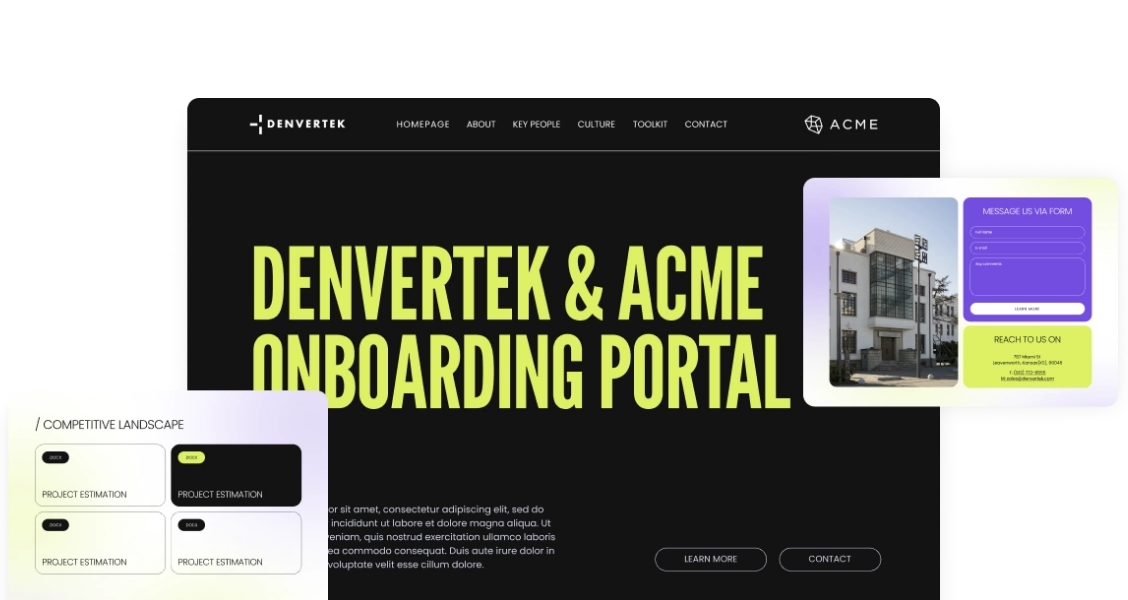
The ten formats above describe what goes into a proposal. For real visual examples of how enterprise sales teams are presenting them — as branded, trackable microsites instead of static PDFs — browse the gallery on the sales microsite examples page, or read our step-by-step guide to presenting a proposal.
Browse interactive proposal examples
How to write a business proposal in 7 steps
A proposal that wins is not written in one sitting. It is built in stages, with each stage designed to eliminate a specific reason buyers say no. Here are the seven steps used by enterprise sales teams that close complex deals.
Define the buyer's problem before you write a word. Review your discovery notes. Pull out the exact language the buyer used to describe their challenge. The most persuasive proposals open with the buyer's own words, slightly reframed. This signals that you listened and understood — which is the first question every buyer asks when reading a vendor proposal.
Choose the right format for the deal size and context. A two-page summary works for a $15,000 engagement with a buyer you know well. A multi-section interactive document is appropriate for a $500,000 managed services contract with a committee of evaluators. Mismatching format to context signals poor judgement before the buyer has read a single line.
Write the executive summary last, not first. The executive summary is the most-read section of any proposal — especially by decision-makers who were not in the room. Write it after all other sections are complete, so it reflects the strongest version of your argument. It should make the case in half a page: the problem, the solution, the expected outcome, and the ask.
Anchor the pricing section on value, not cost. Present the outcome the buyer can expect — time saved, revenue protected, risk reduced — before you state the price. A buyer who has already agreed the outcome is valuable will read the price differently than one who sees the number first. The gap between perceived value and quoted price determines whether the response is "that's expensive" or "that makes sense".
Make the team section specific and human. Buyers buy from people, not companies. Name the individuals who will deliver the work. Include one line of relevant credential for each — not a generic bio, but specific experience that matches this engagement. If the project manager has run three similar implementations in the buyer's industry, say so.
Include one piece of social proof as close as possible to the buyer's situation. A case study from the buyer's industry, with a specific outcome metric, does more to reduce perceived risk than any persuasive language. If you have a reference customer willing to take a call, offer it explicitly. Most buyers will not call — but the willingness to offer signals confidence.
End with a specific, time-bound next step. "Please let us know if you have any questions" is not a next step. A next step sounds like: "I'll send a calendar invite for a 30-minute Q&A on Thursday. If the proposal looks good, we can discuss contracting on the same call." Name the action, the format, and the timing. Whoever owns the next step owns the deal.
Why static PDF proposals lose deals — and what teams use instead
The PDF proposal has three structural weaknesses that compound on high-value deals.
It disappears after you send it. Once a PDF lands in the buyer's inbox, you do not know if it was opened, how long the decision-maker spent on the pricing section, or whether it was forwarded to a stakeholder who now has unanswered questions. You follow up blind.
It cannot be updated after delivery. If the pricing changes, a case study becomes relevant, or the buyer asks for an additional section, you resend the entire document. Every version swap creates confusion about which copy is current — and signals a lack of operational polish at the worst moment.
An interactive proposal built on a microsite platform removes both constraints. You get a live link rather than an attachment. You see which sections drove the most engagement. You update the content without resending. And you can embed media that makes the proposal feel like the product itself.
Browse interactive proposal examples
Build your next proposal in Zoomforth
Enterprise sales teams use Zoomforth to build trackable, branded proposal microsites that show exactly which sections the buying committee read — and update in real time without resending.
Request a demo
Frequently asked questions about business proposals
What is a business proposal?
A business proposal is a formal document that one company sends to another to offer a specific solution to a defined problem or need. In B2B sales, proposals present a scope of work, pricing, timeline, and the reasoning for why your company is the right choice. They differ from quotes, which cover price alone, and from RFP responses, which are submitted in response to a formal procurement request.
What should a business proposal include?
A well-structured business proposal includes: an executive summary, a clear statement of the problem or need, your proposed solution, a scope of work or deliverables, a timeline, pricing, evidence of your capability (case studies, credentials, references), and a clear call to action. Most winning proposals also include a section on the team who will deliver the work and an appendix for supporting materials.
How long should a business proposal be?
A business proposal should be as long as needed to answer the buyer's questions and no longer. For small-to-medium engagements, three to six pages is typical. For large enterprise or government contracts, fifteen to thirty pages or more may be expected. The structure matters more than the length: a concise, well-organized ten-page proposal almost always outperforms a padded twenty-page document.
What is the difference between a business proposal and a quote?
A quote specifies the price for a defined piece of work, usually without context or persuasion. A business proposal goes further: it frames the problem, presents a solution, makes the case for why your company is the right choice, and includes pricing as one part of a broader argument. Proposals are appropriate for complex or high-value engagements; quotes work for straightforward, repeat, or commodity work.
What is the difference between a solicited and unsolicited proposal?
A solicited proposal is written in response to a specific request from a buyer — either through an RFP, an informal ask, or a structured procurement process. An unsolicited proposal is sent proactively, without a formal request, to introduce a solution the sender believes the recipient needs. Solicited proposals are usually more focused because the buyer has already defined the scope; unsolicited ones must first create the need before making the case.
Related resources
RFP response guide
When the buyer sends a formal Request for Proposal: structure, strategy, and the tools that turn a procurement document into a deal won.
One-pager templates
Not every deal needs a full proposal — ready-to-use one-pager templates for quick sends, early-stage outreach, and leave-behinds after a first call.
Sales microsite examples
Real interactive proposals, one-pagers, and account portals built by B2B sales teams — browse the gallery to see what these proposals look like in practice.
Sales microsite platform
The platform built for enterprise sales: proposals, RFP responses, one-pagers, and account portals — all trackable from a single dashboard.