AI-generated websites have changed who can build a digital experience. A business development manager, an HR team or a consultant can now describe what they need, refine it in conversation with an AI assistant and have a working microsite in a fraction of the time a web team would need. For enterprises, the open question is what happens once that site goes live.
This article looks at what AI-assisted creation changes for enterprise digital communications, the five challenges it raises, and how separating creation from publishing helps organizations keep control.
Ready to build your first microsite in hours?
Join enterprise sales, marketing and HR teams building trackable microsites — no developer needed.
Rated 4.6/5 on G2 · Trusted by Fortune 500 teams
Thanks — we've got your request.
Check your inbox: we've just emailed you a link to book your demo with Wendie.
We'll email a written quote for your team to the address you gave us by the next business day.
While you wait, browse real microsites in our microsite inspiration gallery, learn the basics in the Zoomforth Academy, or see what's included in Zoomforth pricing.
AI-generated websites move web creation from specialists to every team
AI-generated websites turn website creation from a specialist skill into an everyday business capability. Until recently, a professional digital experience needed a designer, a writer and someone to turn both into working code, so many good ideas never got built.
A business development team might have wanted an interactive client proposal but lacked the budget to commission one. An HR team might have planned a recruitment microsite and waited on a stretched web team. A consulting practice might have defaulted to PowerPoint or PDF because those formats were familiar.
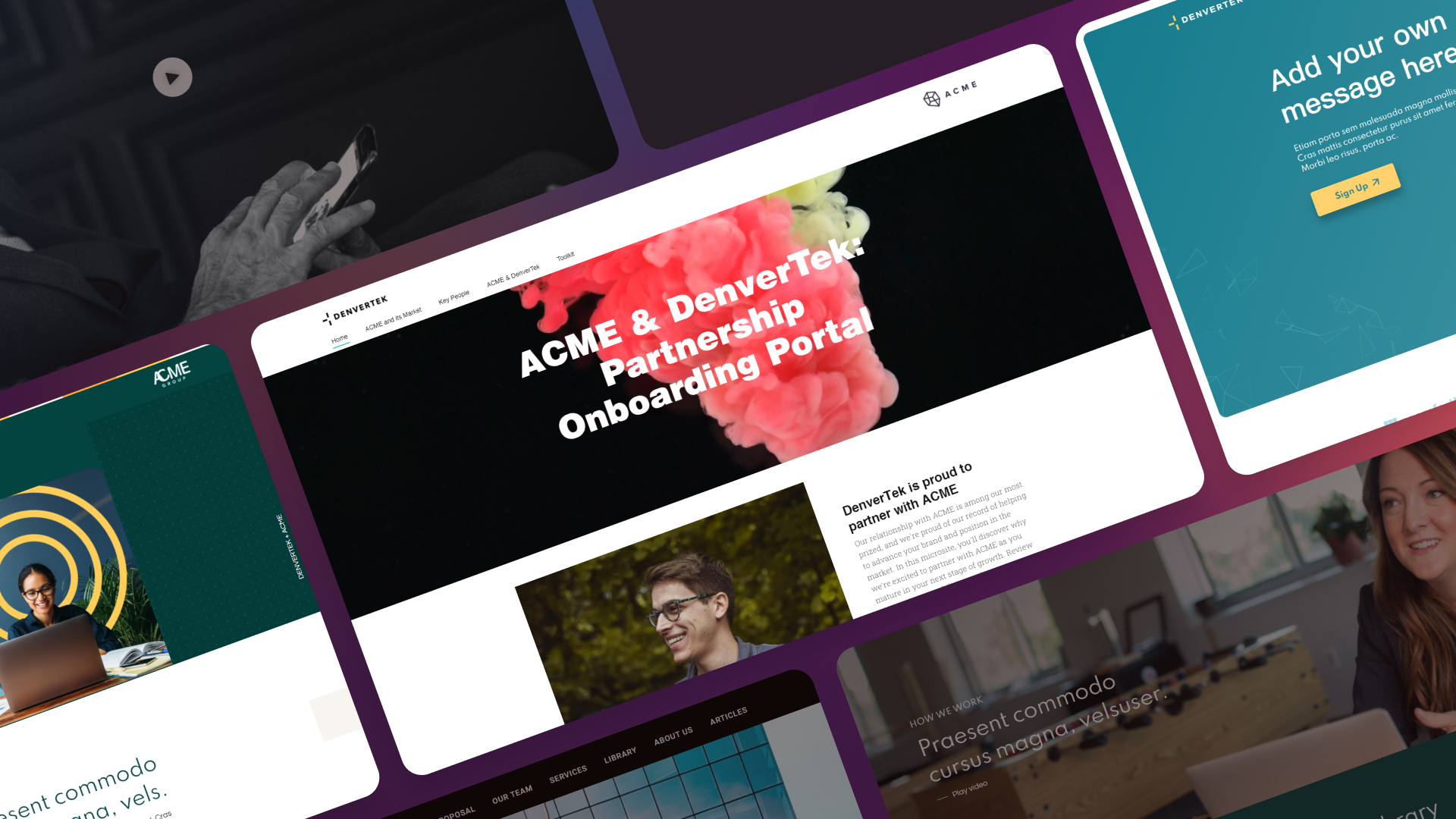
AI assistants such as ChatGPT and Claude now help people write content, explore design concepts and, depending on the tool and workflow, generate working HTML, CSS and JavaScript. The result can be an interactive proposal, a tailored onboarding experience for a new employee, a digital annual report, a client information portal or a campaign microsite. None of these needs the development process of a corporate website anymore, which changes who can take part.
What 10 experienced Zoomforth users expect from AI in digital content
Demand for easier content creation is not new, but the tools that can meet it are. In Zoomforth’s 2026 Enterprise Microsite & Digital Content Experience Benchmark, a focus group of ten experienced Zoomforth users answered questions about the challenges and opportunities in digital communications.
- Nine of the ten chose artificial intelligence as one of the trends with the greatest impact on digital content experiences over the next two years.
- Eight placed ease of content creation among their three most important considerations when evaluating a digital content platform.
- Four named producing content quickly as their single biggest challenge.
These findings come from ten selected users of one platform, so they are qualitative signals rather than an industry benchmark. They still show the priorities of people who already produce digital experiences: AI matters to them because it makes effective communication accessible to the people who need it, and easier creation is only part of that.
Creating an AI-generated website vs. publishing it: the questions that remain
Creating an AI-generated website answers the creative questions; publishing it raises the enterprise ones. Picture someone on a global consulting firm’s business development team who uses AI to build an interactive microsite for a prospective client. The design is strong, the navigation works and the content fits the client better than a standard presentation would.
Before it is shared, the firm still has to answer several questions:
- Who is authorized to publish it, and where will the content be stored and served from?
- Is the client information protected, and can access be restricted to specific people?
- Does the site meet the firm’s brand and accessibility requirements?
- Can the firm see whether the content is used and, where appropriate, how visitors engage with it?
- Who is responsible for the site after its creator moves on to another project?
Enterprises have faced these questions for years. AI makes them more pressing because it multiplies the number of people who can create digital experiences on their own. The technology to create content is becoming more accessible, and the responsibilities that come with publishing it remain.
Five challenges AI-generated websites create for enterprises
1. Brand consistency without blocking creativity
Brand consistency gets harder when employees can generate designs on their own. Large organizations invest heavily in brand guidelines, approved templates and design systems so that customers get the same experience from every department. An AI-generated design can look polished and still depart from those standards.
Restricting AI design tools is rarely the answer. A workable framework combines approved brand assets, reusable design specifications, review steps and publishing permissions, with one goal: making on-brand content the easiest content to produce, so employees have no reason to leave the approved process. Our guide to brand consistency covers the basics.
2. Security and access control for AI-generated code
The security question for an AI-generated website is whether the right people can access it under the right conditions. A public marketing site carries a different risk from one that holds confidential client information, a commercial proposal or internal communications. Depending on the content, that may call for password protection, email authentication, multi-factor authentication or the organization’s single sign-on.
The security of the publishing environment and the security of the content are separate matters. AI-generated code can contain vulnerabilities, unsuitable external dependencies or risky data handling that needs technical review; the OWASP guidance on secure coding with AI is a useful starting point. A secure platform does not make externally generated code secure, so organizations need controls both before publication and during delivery.
3. Data protection when visitors arrive
Publishing a website can involve personal data even when its only purpose is to communicate. Visitor analytics, registration forms, cookies and authentication all have data protection implications. Under regulations such as the GDPR, those responsibilities stay with the organization and cannot be handed to the tool that created the site.
Businesses need to know what information is collected, why, where it is processed, who can access it and how long it is kept. AI-assisted creation makes clear policies, documented responsibilities and the right publishing configuration more important, because more people are publishing.
4. Ownership of every site after the project ends
A corporate website usually has a known owner, named administrators and a maintenance process. When dozens of departments create hundreds of individual experiences, that visibility disappears quickly: nobody is sure which sites are live, who owns them, who can access them or whether the content is still accurate.
A microsite built for a three-month project can stay online long after the project ends. Enterprise publishing therefore needs ownership, lifecycle management and a simple way to update or retire content. This matters most when the content concerns client relationships, regulated activities or commercially sensitive information.
5. Measuring whether the communication worked
More content does not guarantee better communication. An interactive presentation can look impressive and still fail to engage its audience, and a well-designed microsite can bury the information visitors came for.
Engagement analytics show which pages attract attention, where visitors spend time and which content needs work. Where visitors are identified through tracking or authentication, individual engagement may also be available. The aim is to learn whether the communication helped its audience find information, make decisions and act, which becomes more valuable as creating content gets easier. See how microsite analytics work in Zoomforth.
Separating creation from publishing: one environment for every tool
Separating the tools that create digital experiences from the environment that publishes them lets teams use AI without giving up enterprise control. Many website builders have long combined creation, design, publishing and management in one system, and that model still suits organizations that want a guided, consistent way to build content.
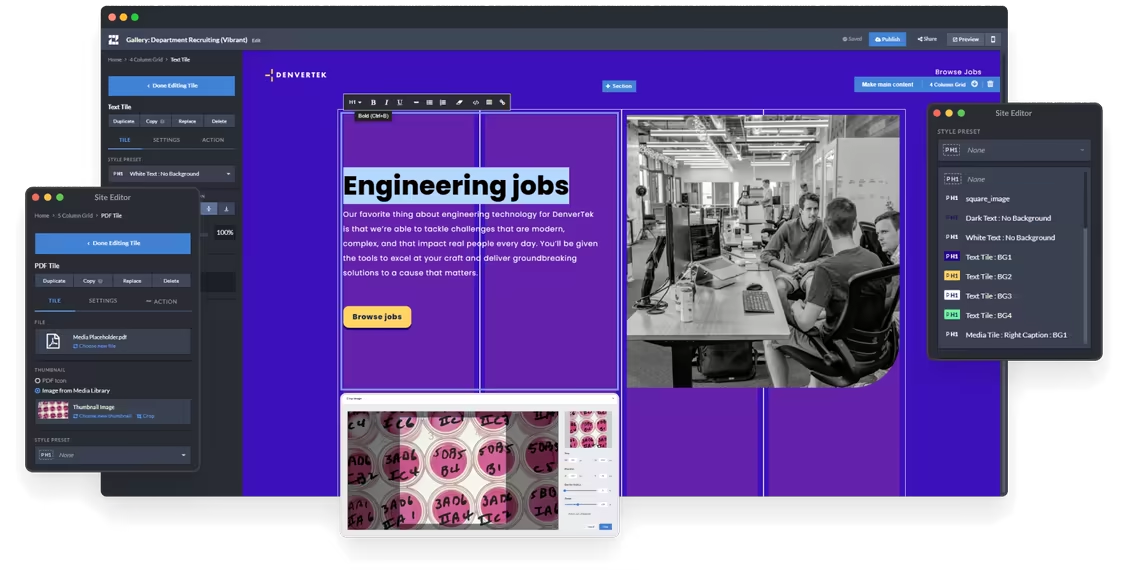
AI opens another option. A marketing team might use a visual editor, a developer might write custom code and a business development manager might generate a microsite with an AI assistant. Instead of requiring one creation method, the organization sets up a common publishing environment with the access controls, oversight and analytics it needs.
The traditional website workflow is a linear process, often with specialist skills and several handovers:
- Brief and plan
- Design (creative)
- Develop (technical)
- IT review and approval
- Publish (live website)
A more flexible, AI-assisted model offers broader creation choices with a common, enterprise-grade publishing environment:
- Idea (the communication goal)
- Create (with AI or other design tools)
- Review (brand, security, accessibility and content)
- Publish (through Zoomforth)
- Measure and improve (engagement and outcomes)
The result: more people can create effective digital experiences, while the organization keeps control, security and insight through a consistent publishing environment.
This is the direction Zoomforth has taken. Alongside its visual microsite builder, Bring Your Own Design lets teams upload websites built in other tools, including AI assistants, and publish them with the same security features as any Zoomforth site. The principle behind it is that how content is created does not have to decide how it is governed, shared or measured.
Externally generated content still needs review, and different creation methods need different maintenance. Separating creation from publication gives organizations the flexibility to adopt new tools without replacing their digital infrastructure each time a new design technology appears.
Will AI website builders replace traditional website builders?
AI website builders are unlikely to replace traditional website builders outright. Traditional builders offer structured editing, proven templates, content management and workflows designed for specific users. AI-generated websites offer a different kind of flexibility: faster experimentation, bespoke layouts and experiences that used to need a specialist.
Most enterprises will use both. Some teams will prefer the predictability of a visual editor; others will benefit from AI-assisted design or custom development. The real question is whether the organization can support those approaches within one publishing strategy, choosing the right tools for creation while keeping common standards for publication.
AI-generated websites still need responsible publishing
The promise of AI-assisted design is that people across the business can communicate in the way that suits their audience. A recruitment team can build a more engaging candidate experience, a consultant can present complex recommendations interactively and a sales team can tailor materials to one client. In each case, the value comes from a better experience for the recipient.
Making that freedom sustainable means keeping control over security, data protection, brand standards, content ownership and the information needed to judge effectiveness. AI changes who creates digital communications, and enterprises still have to manage them responsibly. As the barriers to creation fall, the way an organization publishes, governs and measures those experiences becomes one of its most important decisions.
Ready to publish AI-generated websites with enterprise access controls and analytics? Request a demo.
Frequently asked questions
Can AI create a professional business website?
AI tools can help with website copy, layouts, design concepts and working code. The quality depends on the tool, the instructions and the level of human review. Business websites still need checks for accuracy, usability, accessibility, security and brand compliance before they are published.
What are the risks of AI-generated websites for enterprises?
The main risks are insecure code, inappropriate handling of data, inconsistent branding, unapproved third-party dependencies and a lack of oversight once sites are live. The level of risk depends on the design, the functionality, where the site is hosted and who the audience is.
Can businesses use AI to create microsites?
Yes. AI tools can help create microsites for proposals, campaigns, recruitment, events and onboarding. The finished site needs to be compatible with the chosen publishing platform and meet the organization's security, legal and brand requirements.
What is enterprise digital publishing?
Enterprise digital publishing is the set of processes and technology an organization uses to make digital content available to the right audience while managing access, security, branding, governance, content ownership and engagement analytics.
Do AI-generated websites need separate hosting or publishing arrangements?
A generated website needs an environment that can deliver it to visitors. Some AI tools offer publishing, while others produce files that have to be deployed elsewhere. Enterprises should choose an arrangement that meets their technical, security, data protection and management requirements.
Add Zoomforth as a preferred source on Google