What an ABM tool is — and what the category actually contains
Ready to go digital?
Discover how Zoomforth can help you.
Join 500+ enterprise sales, marketing and HR teams building trackable microsites — no developer needed.
Rated 4.76/5 on G2 · Trusted by Fortune 500 teams
Thanks — we've got your request.
Check your inbox — Wendie has sent her calendar link.
While you wait, browse real microsites in our microsite inspiration gallery or learn the basics in the Zoomforth Academy.
An ABM tool is software that helps marketing and sales teams identify, engage, and convert target accounts through personalised, coordinated outreach. But "ABM tool" is not a single product category — it is an umbrella for at least five distinct functions that most programmes combine:
- Account intelligence: Identifying which accounts to target and surfacing intent signals (6sense, Bombora, Clearbit)
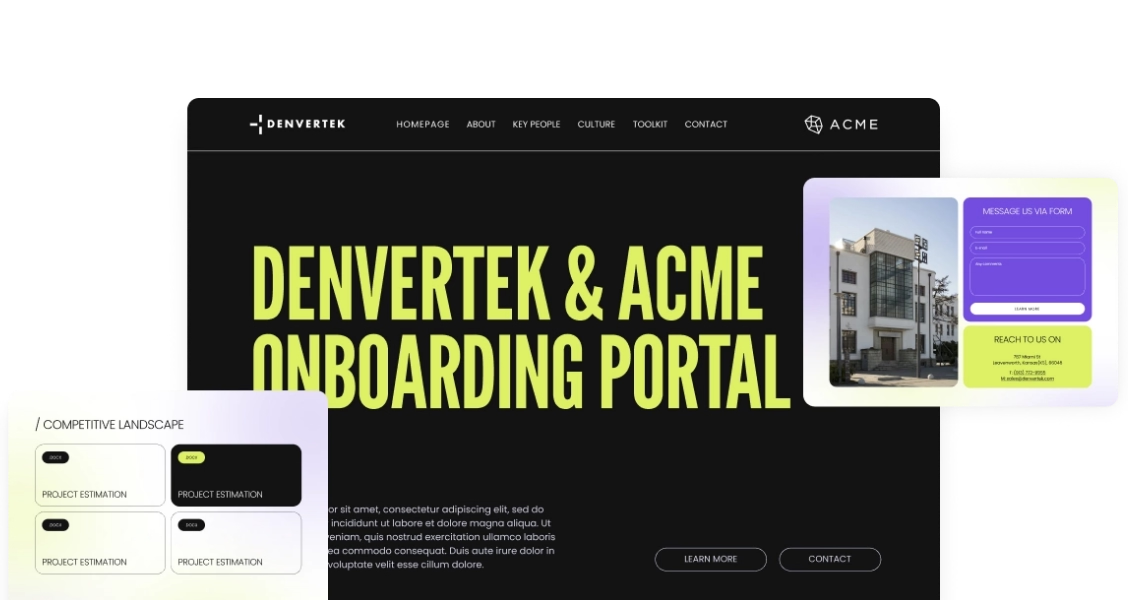
- Personalisation: Creating account-specific content experiences — landing pages, microsites, proposals. Buyers searching for this layer often call it account-based web and content experiences software (Zoomforth, Uberflip, Pathfactory)
- Advertising: Running account-targeted display and social ads (Demandbase, Terminus, LinkedIn)
- Orchestration: Coordinating outreach across channels — sales, marketing, paid, and content (Demandbase, 6sense, HubSpot ABM)
- Analytics: Measuring account-level engagement and pipeline influence (most platforms above include this)
Most effective ABM programmes use tools from multiple categories. The "best ABM tool" question is less useful than "which tool fills the most important gap in my current stack?" For the personalisation layer, Zoomforth builds ABM microsites for each target account.
9 ABM tools compared
The table below covers the nine most widely deployed ABM tools across enterprise B2B marketing teams, organised by primary function.
| Tool | Primary function | Best for | Team size | Starting price | |
|---|---|---|---|---|---|
| Demandbase | Full-stack ABM suite (intelligence + advertising + orchestration) | Enterprise programmes with dedicated ABM team | Partial — campaigns yes, custom page builds need design/dev | 20+ in marketing | Custom (typically $50k+/yr) |
| 6sense | Intent data, predictive scoring, orchestration | Identifying in-market accounts before they engage inbound | No — page experiences come from other tools in the stack | 10+ in marketing | Custom (typically $40k+/yr) |
| Terminus | Account-targeted advertising + engagement hub | Multi-channel ABM advertising at scale | Partial — ad and email yes, account pages need dev | 5+ in marketing | Custom ($20k+/yr) |
| RollWorks | Account targeting + CRM-integrated advertising | SMB and mid-market ABM programmes starting out | Partial — ad workflows yes, no page builder | 2–10 in marketing | From $975/month |
| HubSpot ABM | CRM-native ABM tools (account scoring, target account lists) | Teams already on HubSpot wanting ABM without a separate platform | Yes for landing pages, within HubSpot templates | Any | Included in Marketing Hub Professional ($800/mo+) |
| LinkedIn ABM | Account-matched advertising on LinkedIn | B2B advertising to named accounts without a dedicated platform | N/A — advertising only, no owned pages | Any | Self-serve (ad budget based) |
| Clearbit | Account intelligence and CRM enrichment | Enriching your CRM and identifying high-fit accounts | N/A — data enrichment only | Any | From $15k/yr |
| Bombora | Intent data (B2B content consumption signals) | Identifying accounts actively researching your category | N/A — intent data only | Any | Custom (typically $20k+/yr) |
| Zoomforth | Account-specific content experiences (microsites, portals, proposals) | Creating personalised landing pages, proposals and portals for target accounts | Yes — full multi-section microsites, no developer | Any (enterprise) | Custom enterprise pricing |
Detailed breakdown: each ABM tool
Demandbase — the full-stack enterprise ABM platform
Demandbase is the most comprehensive ABM platform in the category — combining account intelligence, intent data, advertising, website personalisation, and sales intelligence in a single platform. It is also the most complex and the most expensive.
- Best for: Enterprise marketing teams with a dedicated ABM function, a six-figure tools budget, and the technical resources to configure and maintain a complex platform
- Key features: Account intelligence with firmographic and technographic data, intent scoring, advertising across display and social, website personalisation, Salesforce integration, sales intelligence via the Demandbase Sales product
- Limitation: Significant implementation investment and ongoing administration. Not suited to programmes that are early-stage or that do not have dedicated ops resources. Pricing starts at five figures annually.
6sense — intent-driven account identification
6sense's differentiation is predictive intelligence: it aggregates intent signals from across the web to identify accounts that are actively researching your category before they visit your website or engage with your sales team. This "dark funnel" visibility is genuinely valuable for enterprise programmes where being early to an account's buying cycle is the primary competitive advantage.
- Best for: Enterprise sales-led organisations where identifying in-market accounts early is the primary ABM value driver
- Key features: Predictive account scoring, intent data from B2B content consumption, opportunity intelligence, advertising, Salesforce and HubSpot integration
- Limitation: Intent data quality is good but not perfect — it reflects content consumption patterns, not purchase intent directly. Expensive. Requires dedicated implementation and ongoing ops.
Terminus — account-targeted advertising at scale
Terminus is built around coordinated, account-targeted advertising — serving display ads, LinkedIn ads, and email signatures to named accounts across channels. It is strongest for teams whose primary ABM motion is paid advertising to defined account lists, rather than content personalisation or intent identification.
- Best for: Marketing teams running paid ABM campaigns at scale who need a single platform to manage account targeting across multiple advertising channels
- Key features: Account-targeted display and LinkedIn advertising, engagement hub (measuring account-level engagement across channels), chat personalisation, Salesforce integration
- Limitation: Advertising-centric — not the right choice if personalised content experiences or intent identification are your primary ABM priority.
RollWorks — ABM for smaller teams
RollWorks makes account-based advertising accessible to teams that cannot afford the enterprise suite pricing of Demandbase or Terminus. It integrates with HubSpot and Salesforce, provides basic intent data and account scoring, and runs account-targeted ads across display and social channels.
- Best for: SMB and mid-market B2B marketing teams running their first ABM programme with a limited budget and no dedicated ABM ops resource
- Key features: Account scoring, target account lists, CRM-integrated advertising, basic intent data, LinkedIn integration
- Limitation: Less sophisticated intent data and analytics than the enterprise platforms. Suitable as a starting point; teams with growing programmes often move to Demandbase or 6sense.
Zoomforth — ABM content experiences and personalised pages
Zoomforth fills the personalisation gap in most ABM stacks. It is not an ABM intelligence platform or an advertising platform — it is where ABM programmes create the content experiences that target accounts actually see: personalised landing pages, proposals, client portals, and event microsites that are tailored to specific accounts without requiring a developer or designer for each new page.
- Best for: Enterprise sales and marketing teams that need to create account-specific content experiences — ABM landing pages, proposals, and portals — at scale, without a developer for each new page
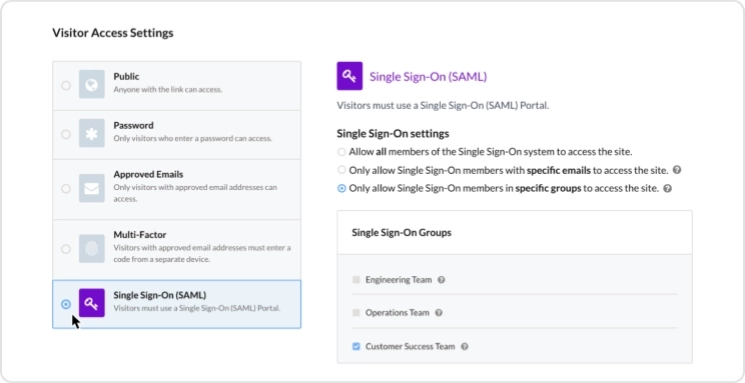
- Key features: No-code microsite builder, named visitor analytics (who visited which page, which sections, for how long), SOC 2 Type II security, access controls (SSO, password, email auth), brand theme enforcement
- Where it fits in the ABM stack: Sits between account identification (Demandbase, 6sense, Bombora) and CRM (Salesforce, HubSpot). After identifying a target account, the personalised content experience is built in Zoomforth. After the account engages, the engagement data feeds back into the CRM for sales follow-up.
- Limitation: Not a demand generation tool, an advertising platform, or an account intelligence system. It creates and tracks the content; it does not identify which accounts to target or run the paid advertising.
LinkedIn ABM, HubSpot ABM, Clearbit, Bombora
LinkedIn ABM: LinkedIn's native Matched Audiences feature allows account-targeted advertising without a separate ABM platform — the most accessible entry point for teams new to ABM. Best for B2B advertising to named accounts where the budget does not yet justify a dedicated platform.
HubSpot ABM: For teams already on HubSpot, the ABM tools in Marketing Hub Professional add target account lists, account scoring, and basic account-level reporting without a separate platform. Not as sophisticated as dedicated ABM suites, but effective for early-stage programmes.
Clearbit: Account intelligence and CRM enrichment — best used as a data layer for an existing ABM programme rather than as a standalone ABM tool. Enriches your CRM with firmographic and technographic data on target accounts.
Bombora: Intent data aggregated from B2B content consumption across thousands of publisher sites. Used alongside other ABM platforms (Demandbase, 6sense, HubSpot) to identify accounts actively researching your category. Best as an add-on to an existing intelligence layer.
How to choose ABM tools for your programme
The right ABM tools depend on where you are in your programme's maturity, the size of your team, and the most important gap in your current stack.

Starting an ABM programme
Begin with the tools you already have: CRM (Salesforce or HubSpot) for account lists and tracking, LinkedIn for account-targeted advertising, and a content personalisation platform for building the actual experiences. Add intent data and orchestration once you have validated the programme logic and have the team to operate it.

Scaling an existing programme
If you have proven the ABM motion and are ready to scale, the highest-ROI additions are typically: intent data (to prioritise which accounts to engage and when) and content personalisation at scale (to sustain account-level relevance as your target list grows). Advertising platforms add value when you need to cover more channels than LinkedIn alone.

Filling the personalisation gap
Most ABM programmes are good at identifying accounts and running advertising, but create generic content that does not feel personalised to the account. The highest-impact fix is usually a content personalisation tool — a way to build account-specific landing pages, proposals, and portals without bottlenecking on a developer for each new account. This is the gap Zoomforth is specifically designed to fill.

Measuring programme effectiveness
Start with account-level engagement metrics (did the right people at target accounts actually engage with your content?) before investing in sophisticated attribution modelling. Per-visitor analytics from your content platform tell you which accounts are actively engaged; pipeline influence metrics from your CRM tell you whether ABM is moving deals.
The five capabilities to check before you shortlist
Whatever category a vendor sells itself as, these are the capabilities that determine whether an ABM platform earns its place in the stack. Use them as a scoring sheet during evaluation.
- Site-visitor tracking. Can it tell you which companies visited, where they came from, and which content they engaged with? Without this, account prioritisation is guesswork.
- Contact and account management. Does it keep the account list orderly and trigger action at defined points in the funnel, or does it hand that back to your CRM?
- Content creation and hosting. ABM consumes custom content faster than any other motion. A platform that lets a marketer build and host account-specific experiences — without a developer per account — removes the usual bottleneck.
- Email and orchestration. Look for triggered sends, one-to-one content rules per recipient, and real-time reporting rather than next-day exports.
- Account-level analytics. The data has to be readable by the people who act on it. If your team has to dig for it or interpret it, it will not get used.
For what to do with the numbers once the tool is in place, see ABM metrics: what to track and why.
Fill the personalisation gap in your ABM stack
Zoomforth helps enterprise marketing teams build personalised ABM landing pages, proposals, and portals — at account scale, without developers. Request a demo to see how it fits your stack.
Request a demo
Frequently asked questions about ABM tools
What is an ABM tool?
An ABM tool is software that helps marketing and sales teams identify, engage, and convert target accounts through personalised, coordinated outreach. The category spans account intelligence (identifying which accounts to target), engagement and personalisation (creating account-specific content experiences), advertising (running account-targeted digital ads), orchestration (coordinating outreach across channels), and analytics (measuring engagement and pipeline influence at the account level).
What is the best ABM tool for a small team?
For small ABM teams (fewer than five people), prioritise tools usable without dedicated technical resources: a CRM integration-friendly account intelligence tool like Clearbit, LinkedIn's native ABM targeting for advertising, and a no-code microsite platform like Zoomforth for personalised content experiences. Avoid enterprise ABM suites that require dedicated technical implementation until you have proven the programme at smaller scale.
Do you need a dedicated ABM platform to run ABM?
No. Many effective ABM programmes run on a combination of existing tools — CRM, LinkedIn, a personalisation tool, and a content platform — rather than a dedicated ABM suite. The dedicated platforms add value primarily through intent data aggregation, advanced account scoring, and orchestration across channels. These capabilities justify their cost at scale; smaller programmes typically get better ROI from point solutions that cover the highest-priority gaps in their existing stack.
What is the difference between ABM tools and demand generation tools?
Demand generation tools are optimised for generating a large volume of leads from a broad audience — typically through content syndication, paid search, and inbound conversion. ABM tools are optimised for engaging a specific list of named accounts with personalised outreach, regardless of whether those accounts are currently showing inbound intent. Demand generation measures leads and cost per lead; ABM measures account engagement, pipeline influence, and revenue from target accounts.
How do you choose an ABM platform?
Score candidates against five capabilities rather than category labels: site-visitor tracking, contact and account management, content creation and hosting, email and orchestration, and account-level analytics. Then weight them by the biggest gap in your current stack — most teams are already good at identifying accounts and running ads, and are short on the ability to produce account-specific content without a developer. Start with the tools you own, prove the motion on 20 to 50 accounts, and only add an enterprise suite once the programme logic is validated.
Which ABM tools track website visits?
Two different things get called visitor tracking. Account intelligence tools such as Clearbit, ZoomInfo and 6sense do reverse-IP and identity resolution to tell you which companies visited your public site. Content experience platforms such as Zoomforth track named individuals on the account-specific page you sent them, so you see which stakeholder opened it, which sections they read, and how long they spent. For ABM, the second is the more actionable of the two, because it identifies the person rather than inferring the company.
Which ABM platforms track engagement?
Most ABM suites report engagement as an aggregate account score built from ad impressions, email opens and site visits. That is useful for prioritisation but too coarse to act on in a specific deal. Per-stakeholder engagement — which named person opened the proposal, which section they read, and whether they returned — comes from the content platform hosting the experience. If you need engagement data that a sales rep can use in the next conversation, check that the platform reports at visitor level and not only at account level.
Related resources
ABM landing pages guide
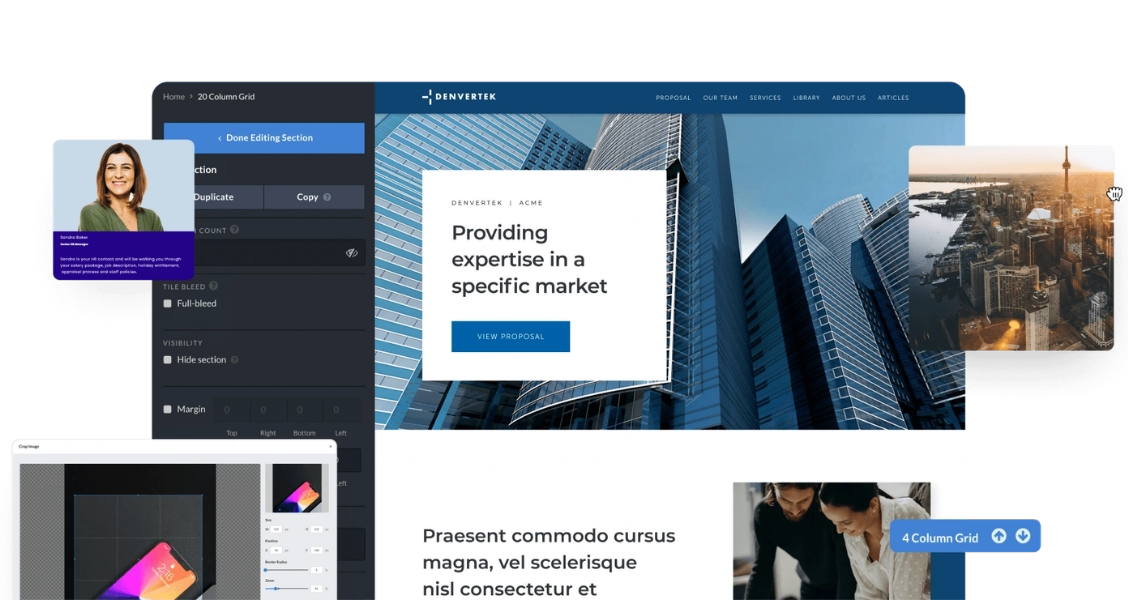
A practical guide to designing ABM landing pages that engage target accounts at every personalisation level — from industry segments to 1:1 builds.
Read the guide

Account-based marketing landing page examples
Real ABM page designs from B2B marketing teams — see what effective account-based pages look like in practice, at each personalisation level.
View examples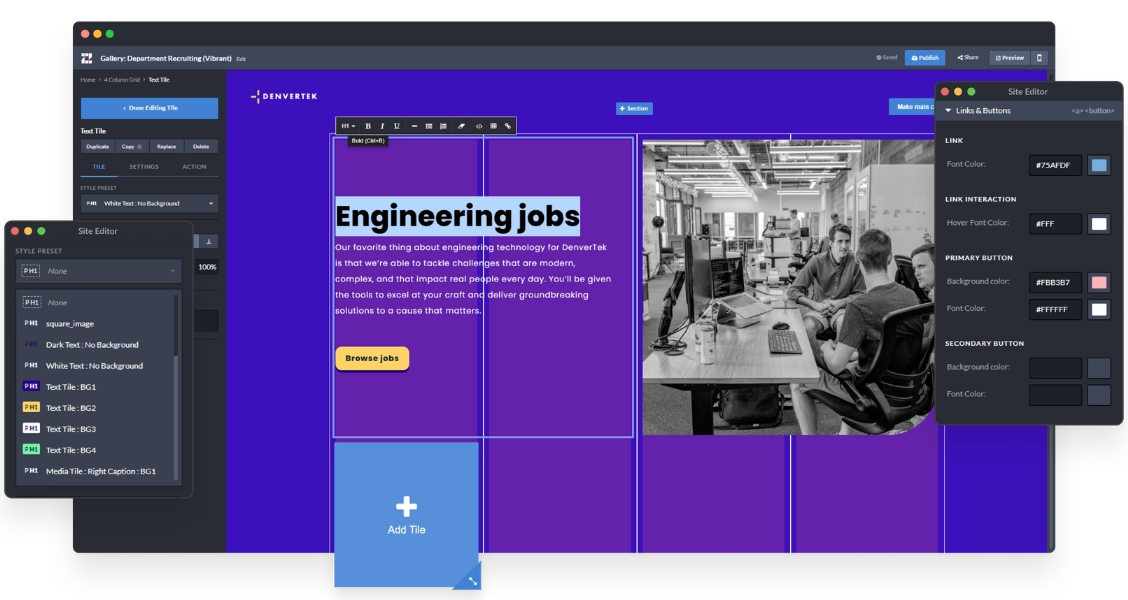
All comparisons
See how Zoomforth compares to other interactive content platforms for enterprise B2B sales and marketing teams.
View comparisons