When it comes to sales enablement vs. sales operations, it can be hard to tell how one relates to the other and how they work together within the overall organization of a company. Both departments, however, are crucial to the success of the sales cycle. Their emphasis on sales productivity and expertise can help increase close rates and even boost overall revenue.
But before you can understand how they work together, it’s important to see exactly what sets them apart. We’re going to take you on a brief overview of sales enablement and sales operations and then explain exactly how the two function together. Let’s get started.
Ready to send sales content you can track by stakeholder?
Join enterprise sales, marketing and HR teams building trackable microsites — no developer needed.
Rated 4.6/5 on G2 · Trusted by Fortune 500 teams
Thanks — we've got your request.
Check your inbox: we've just emailed you a link to book your demo with Wendie.
We'll email a written quote for your team to the address you gave us by the next business day.
While you wait, browse real microsites in our microsite inspiration gallery, learn the basics in the Zoomforth Academy, or see what's included in Zoomforth pricing.
What is sales enablement? Ongoing training and coaching for reps
At its core, sales enablement is the process of training your sales reps. But that doesn’t just mean handing reps an onboarding packet after hiring and calling it a day! Instead, sales enablement requires a structured, ongoing program designed to help track and improve the abilities of your sales reps. That means sales enablement can include everything from training and coaching to courses and special events.
The sales enablement team is all about checking in with sales reps on a regular basis and constantly searching for ways to streamline and optimize performance whether that’s through refreshing their skills or adding to their knowledge base. You can learn the basics in our sales enablement guide for beginners.
Sales enablement org chart: manager, developers, analysts, marketing executives
The first thing to understand about the role of sales enablement is that it’s truly for everyone, whether the company is a large Fortune 500 or a small, regional business. While some companies will be able to build out a dedicated team, others can delegate sales enablement duties across the sales and marketing departments as they see fit.
That said, every sales enablement team should have a thoughtful structure. This is how you’ll create order and how you can set expectations for who’s responsible for what. Here are the basic players in many sales enablement teams:
- Manager: heads up the team and takes responsibility for implementing strategies that align with the company’s vision.
- Developers: focus on working on software and user experience to assist the sales team.
- Analysts: measure the success of the program’s outcomes and help explain why and how it fails or succeeds.
- Marketing executives: target personas for developed technology and create sales messaging for the reps to adopt.
Five KPIs for enablement teams, from lead-to-opportunity rate to knowledge retention
Five main KPIs for sales enablement give a full picture of the overall success of the program. They are:
- Lead-to-Opportunity Conversion Rate: a way of measuring the chance for leads (sales prospects) to become opportunities (potential clients/customers with a high chance of purchasing) and it shows whether reps are reaching the right people at the right time.
- Content Performance: a way of seeing if the content your team is producing is relevant to your target audience. It can also help determine if reps are unaware of a piece of content that could be helpful to them.
- Win Rate: your number of won opportunities (or closed deals) divided by your total number of opportunities. The better this rate is, the better your team is doing when it comes to closing.
- Sales Cycle Length: the length of time it takes your reps to get from first contact to final sale and the shorter this time period, the better for your teams.
- Knowledge Retention: the amount of training your teams retain throughout the year.
What is sales operations? Planning, forecasting, and compensation
The sales operations team handles the logistics of your sales team, which can include everything from sales planning and forecasting to compensation. Basically, the role of sales operations is to help the overall sales force run efficiently and effectively.
Sales operations also cover a lot of ground including business analytics, administration, and even some elements of sales enablement. They may also play a key role in cross-functional projects, where they can represent the needs of the sales department and act as a liaison between sales and finance, marketing, IT, and other departments.
Sales operations team roles: manager, analyst, tech ops advisor, planning specialist
Your sales operations team, just like your sales enablement team, may vary depending on the size of your company. A general structure that many companies use includes the following roles:
- Manager: develops the sales strategy, divides territories, and creates a sales plan with a forecast.
- Analyst: evaluates and organizes data, provides support to marketing and accounting teams, and analyzes market trends.
- Technical Operations Advisor: uses technology to boost efficiency, tracks KPIs and metrics, and acts as CRM administrator.
- Sales Planning Specialist: aids sales reps by compiling pricing and contract information, manages customer communication, and assists with organization and collaboration.
Four sales operations KPIs: CAC, forecast accuracy, win rate, cycle length
There are many potential sales operations KPIs, but four of the main ones to keep an eye on are:
- Customer Acquisition Cost (CAC): tracks how much it costs the company to gain a new customer and thus helps track overall efficiency. Keeping an eye on your CAC can also help you know where and how to allocate resources.
- Forecast Accuracy: exactly what it sounds like — a measurement of how accurate your sales forecasts are. Tracking this will help you identify any problems in your overall road map and alert you to any red flags in your sales ops framework.
- Win Rate: our number of won opportunities (or closed deals) divided by your total number of opportunities. The better this rate is, the better your team is doing when it comes to closing.
- Sales Cycle Length: the length of time it takes your reps to get from first contact to final sale and the shorter this time period, the better for your teams.
Is sales enablement the same as sales operations? Where they overlap
Now that you have a clearer picture of what sales enablement and sales operations do, you can probably already start to see the ways they overlap. Both teams need each other to do the best job possible. While sales ops look for ways to optimize and streamline processes, they’ll need sales enablement’s help to implement any new tools or strategies. Similarly, sales enablement’s direct communication with reps and the tracking of their progress helps sales ops know where to look for optimization opportunities!
At the end of the day, sales ops and enablement share a symbiotic relationship built to serve the overall health and well-being of the sales team and the company as a whole.
Revenue enablement vs. sales enablement, and sales readiness vs. sales enablement
Sales operations is the comparison most teams start with, but two other terms often come up when you scope an enablement function. Here is where each one sits.
Revenue enablement vs. sales enablement: who the program serves
Revenue enablement vs. sales enablement is a question of scope. Sales enablement equips sales reps to close new deals. Revenue enablement applies the same content, training, and tools to every customer-facing team that affects revenue: marketing, SDRs, account managers, and customer success. It covers the whole customer lifecycle, from first touch to renewal and expansion, so all of those teams work from the same messaging and the same metrics.
Sales readiness vs. sales enablement: outcome and program
Sales readiness vs. sales enablement is the difference between an outcome and the program that produces it. Sales readiness asks whether a rep is prepared for a specific buyer conversation right now: do they know the product, the messaging, and the objections, and have they practised through role-play, coaching, or certification? Sales enablement is the broader program of content, tools, training, and processes that builds that readiness and keeps it current as products and markets change.
One microsite analytics dashboard for sales ops and enablement teams
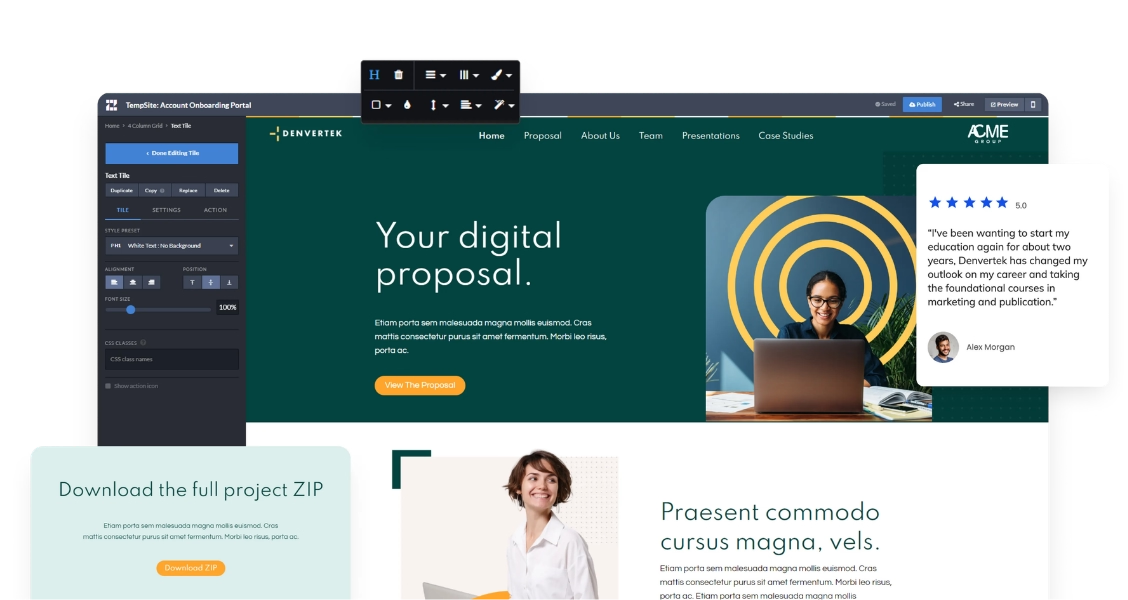
Custom content is a big part of sales enablement and sales ops strategies, which is why Zoomforth brings them together. One of the best parts of using Zoomforth to create custom microsites is that there’s no coding necessary. The drag-and-drop tools let everyone on your team create sites, and custom templates keep them on brand. Our sales enablement platform page shows how teams use it for proposals and deal content.
Since both ops and enablement focus a lot on analytics, you’ll love that every Zoomforth site gives you access to real-time analytics. And thanks to the Zoomforth dashboard, you can track who’s visiting your site and even what they’re looking at while they’re there. Graphs and charts let you share that info with your team, too. Request a demo today.
Frequently asked questions
What is the difference between revenue enablement and sales enablement?
Sales enablement equips sales reps with the content, training, and tools they need to close new deals. Revenue enablement applies the same approach to every customer-facing team that affects revenue, including marketing, SDRs, account managers, and customer success, across the whole customer lifecycle from first touch to renewal and expansion.
What is the difference between sales readiness and sales enablement?
Sales readiness measures whether a rep is prepared for a specific buyer conversation right now: product knowledge, messaging, and skills practised through role-play, coaching, and certification. Sales enablement is the broader program of content, tools, training, and processes that produces that readiness and keeps it current.