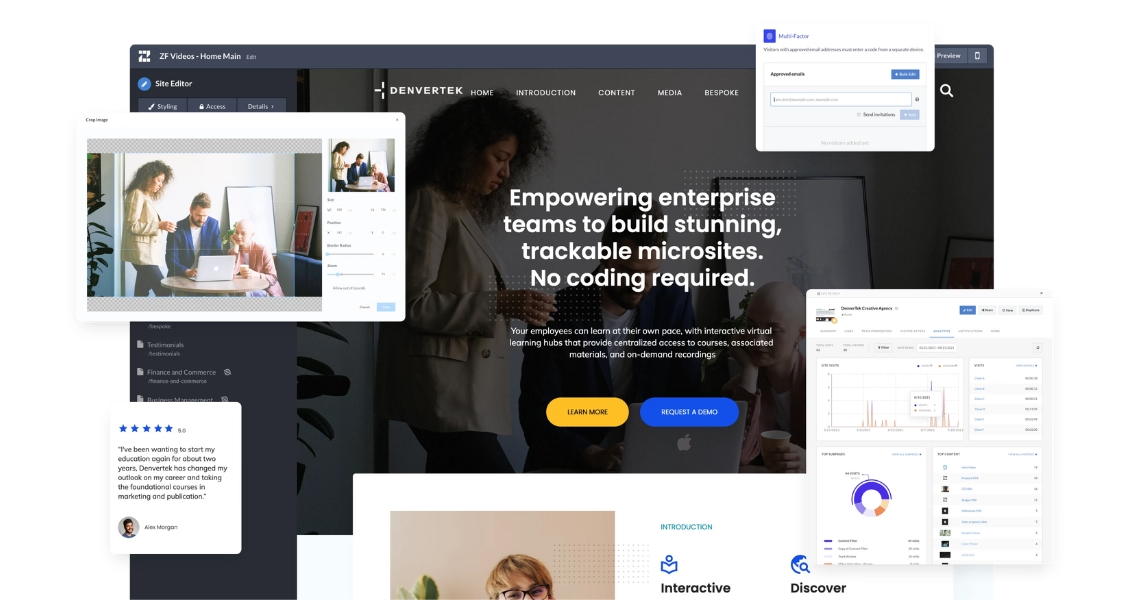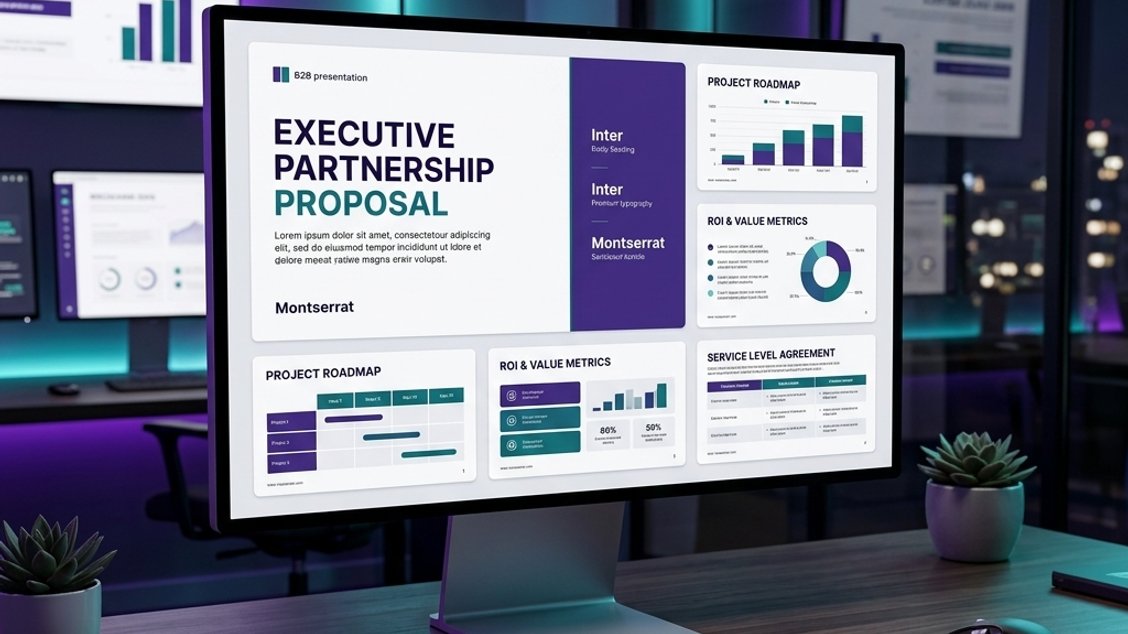
A proposal presentation template gives you the structure to make a credible case — fast, without starting from blank every time. The seven-slide framework below applies to most B2B deals, from a five-figure service engagement to a six-figure enterprise sale, with adjustments for complexity and audience. A proposal presentation serves a different purpose than a proposal document. The presentation is a live event — it drives a conversation, surfaces objections, and builds trust. The leave-behind document (whether a PDF, a printed deck, or an interactive microsite) is what the buying committee shares internally and returns to when making the final decision. Both matter, and they require different treatments.
Ready to go digital?
Discover how Zoomforth can help you.
Join 500+ enterprise sales, marketing and HR teams building trackable microsites — no developer needed.
Rated 4.76/5 on G2 · Trusted by Fortune 500 teams
Thanks — we've got your request.
We'll be in touch by email to set up your demo.
While you wait, browse real microsites in our microsite inspiration gallery or learn the basics in the Zoomforth Academy.
What a proposal presentation needs to accomplish
Before structuring slides, understand what the presentation is actually trying to do. A proposal presentation needs to:
- Confirm that you understood the problem — buyers dismiss proposals from vendors who present generic solutions before demonstrating understanding of the specific context
- Show that your solution directly addresses that problem — the connection between problem and solution must be explicit, not implied
- Differentiate from alternatives — buyers are usually comparing you to at least one other option; your presentation must make the choice obvious without disparaging competitors
- Remove the friction from yes — pricing must be clear, timeline must be realistic, next steps must be defined
A presentation that achieves these four things does not need to be long or visually complex. It needs to be clear.
The seven-slide structure that wins B2B deals
Slide 1: Title and context
Opens with the prospect’s name, the deal name or engagement title, and the date. Includes your company name and the name of the account executive.
What makes this slide effective: addressing it directly to the buyer. “A proposal for [Buyer Company Name] — [date]” is immediately more relevant than a generic opener. The buyer sees their name and knows this was built for them, not adapted from a template.
Optional addition: one sentence that names the core problem you are solving. “A proposal for reducing proposal turnaround time at [Buyer Company Name].”
Slide 2: Problem statement
In the buyer’s language (not yours), describe the problem the proposal is addressing. If you did your discovery work properly, this slide should make the buyer think “yes, that’s exactly the issue.”
Effective problem statements:
- Use specific numbers where possible (“your team is spending 8 hours per proposal on average”)
- Reference conversations you had (“in our discussion on [date], you mentioned that…”)
- Name the business impact, not just the operational friction
Avoid: generic problem framing that could apply to any company in the prospect’s industry. “Many companies struggle with inefficient processes” tells the buyer nothing.
Slide 3: Proposed solution
Connect your solution directly to the problem named in slide two. Each element of your solution should correspond to a specific element of the problem — not as a feature list, but as a causal chain.
Wrong (feature-led): “Our platform includes a drag-and-drop editor, real-time analytics, and a template library.”
Right (benefit-led): “We reduce proposal creation time from eight hours to under two by giving your team templated microsites they can personalize in minutes — with built-in analytics to track buyer engagement, so your follow-up is informed, not guesswork.”
Slide 4: Timeline and deliverables
A visual timeline showing the phases of the engagement, with specific deliverables and milestones at each stage. This slide answers the buyer’s unstated question: “what actually happens after we sign?”
Include:
- Onboarding or implementation phase
- First deliverable or milestone (the moment the client sees first value)
- Steady-state timeline
- Named owner for each phase (your team’s names build accountability)
Keep this slide honest. An unrealistic timeline that collapses in the first 30 days destroys client confidence more thoroughly than any competitor ever could.
Slide 5: Pricing
Present pricing clearly. Buyers who have to dig for the number assume the number is something you are hiding.
Effective pricing slides:
- Show tiers or options if relevant, but do not show so many options that the decision becomes harder
- Include what is and is not included at each tier
- Name any setup or implementation fees separately — they should not appear as surprises
- Use a simple visual (comparison table, pricing block) rather than dense text
If pricing varies based on scope, say so explicitly and offer to follow up with a customized quote. Vagueness at the pricing stage is the single fastest way to stall a deal.
Slide 6: Team and credentials
Introduce the two or three people who will be directly responsible for this engagement. Include:
- Name, role, and a photo
- One or two lines about their relevant experience
- A reference to a comparable client or project (with permission)
Buyers are not just choosing a product — they are choosing the people they will work with. A team slide humanizes the proposal and transfers trust from the brand to the individuals who will be accountable for delivery.
For larger proposals, consider adding a brief case study or client quote relevant to this specific use case. See sales proposal examples for additional reference formats.
Slide 7: Call to action and next steps
End with explicit next steps. What happens after this presentation? Who needs to do what by when?
Effective next-step slides:
- Name the next action (contract review, legal sign-off, technical call with IT)
- Name the person responsible (on both sides)
- Set a specific timeline (“we will send the draft contract by [date]”)
- Include a clear ask: “Are you ready to move forward, or is there a specific question we need to address first?”
The presentation should not end with “let us know if you have any questions.” That framing puts the burden on the buyer. End with a specific proposal for what happens next and ask the buyer to confirm or redirect.
Proposal presentation tips that most teams miss
Present to the stakeholders who are not in the room. Assume the person you are presenting to will share your slides with colleagues who were not on the call. Every slide must make sense without your narration. If a slide requires you to explain what it means, it will not survive internal circulation.
Lead with the problem, not the product. The most common proposal presentation mistake is opening with a company overview or product capabilities before the buyer feels heard. Reserve the first third of the presentation for the buyer’s problem — the product enters the story as the solution to something they already feel.
Leave the detailed product demo for a separate call. A live product demo mid-presentation splits the audience’s attention and runs over time. Reference the product in the proposal and offer to book a dedicated technical demo as a follow-up.
Use a leave-behind, not just slides. The presentation is a conversation driver. The leave-behind is what drives the internal decision. Consider whether your leave-behind should be the same slides, a summary PDF, or an interactive proposal microsite — which gives you analytics on how buyers engage with it after the call ends.
Practice the objection, not just the pitch. Know your three most common objections (price, timeline, implementation effort) and prepare a precise response for each. Objections answered crisply in the presentation remove friction from the internal decision.
Why microsites beat slide decks for proposals
A slide deck is optimized for presenting. An interactive microsite is optimized for deciding.
After your proposal presentation ends, the buyer needs to share your proposal internally with stakeholders who were not on the call — legal, finance, technical, or executive leadership. A PowerPoint deck sent as an email attachment:
- Loses all visual fidelity across different PowerPoint versions
- Has no analytics (you cannot tell whether anyone opened it)
- Cannot be updated after sending (when pricing or terms change, you resend)
- Does not accommodate multiple stakeholders with different interests
A Zoomforth proposal microsite addresses all four of these limitations:
- Renders correctly on any device, in any browser
- Returns engagement data on who opened it, which sections they reviewed, and whether they shared it
- Can be updated after sharing — new case study, revised pricing, updated timeline — without resending
- Organizes content into sections so each stakeholder navigates to what matters to them
For complex B2B deals, the leave-behind microsite often does more selling than the live presentation. See the digital sales room guide for more on how interactive deal rooms support the full buying process.
Ready to replace your slide deck with a proposal that keeps selling after the call? Request a demo and we will show you how.
Frequently asked questions
What should a proposal presentation include?
A proposal presentation should include a title slide naming the prospect, a problem statement in their language, the proposed solution, a project timeline with clear deliverables, pricing, team credentials, and a clear call to action with next steps.
How long should a proposal presentation be?
A proposal presentation should be ten to fifteen slides for most B2B deals. Keep the live presentation to twenty to thirty minutes, leaving time for questions. Complex enterprise proposals may require a separate leave-behind document.
What is better than a PowerPoint proposal presentation?
An interactive microsite proposal is more effective than PowerPoint for complex B2B deals. Buyers can review it at their own pace and share it internally, sellers get real-time analytics on which sections buyers spent the most time reviewing, and the content can be updated after sharing without resending.