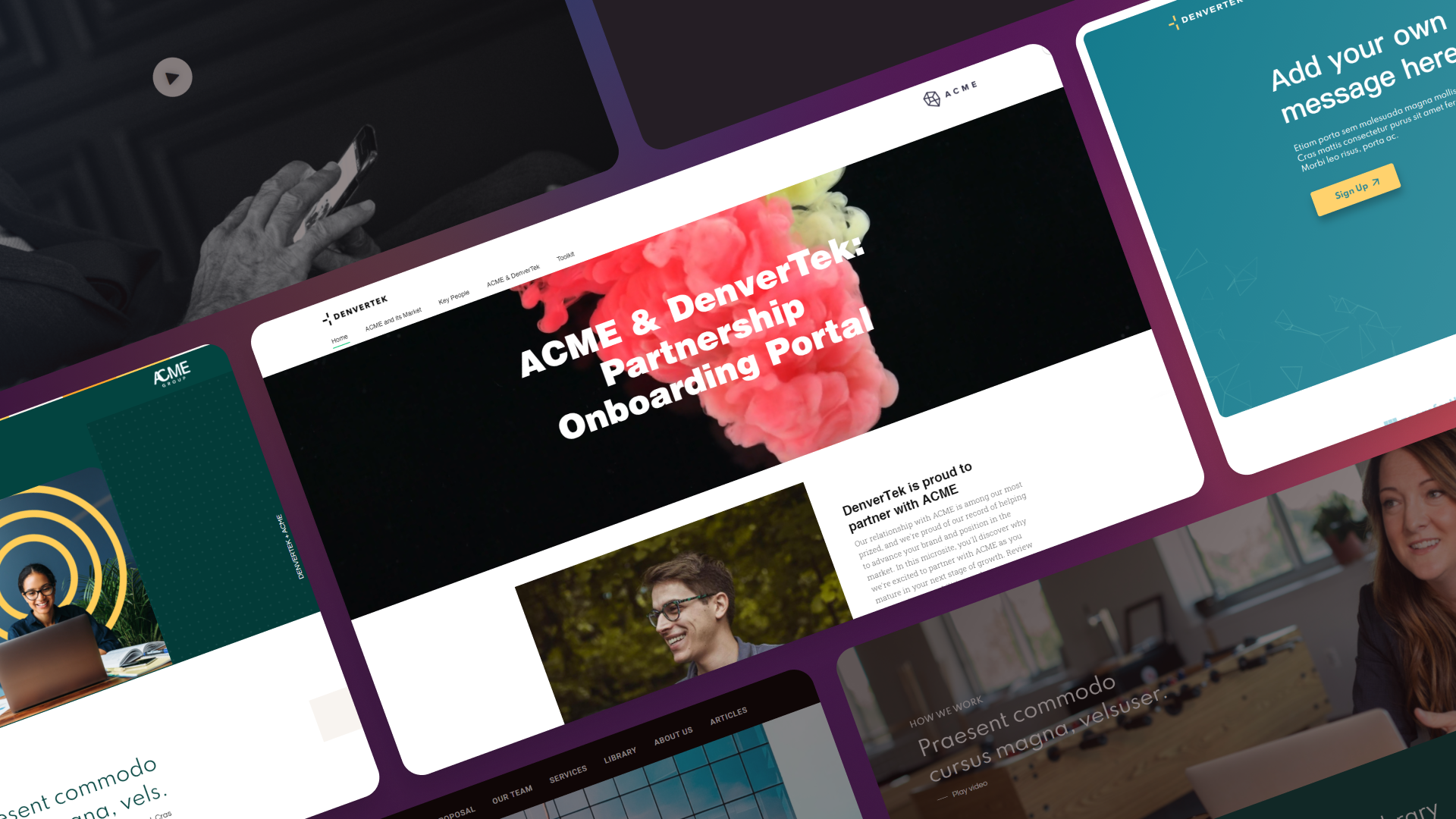
Ready to go digital?
Discover how Zoomforth can help you.
Join 500+ enterprise sales, marketing and HR teams building trackable microsites — no developer needed.
Rated 4.5/5 on G2 · Trusted by Fortune 500 teams
Thanks — we've got your request.
Our team will follow up shortly. If you'd rather pick a time yourself, grab a slot below.
Part 1 of our series on use cases for microsites
After working in the microsite world for over four years, I’ve seen how sales teams use content to win attention in the first, hardest stage of a deal: the initial outreach. Today I’m highlighting how reps use personalized microsites for prospecting to turn cold contacts into booked meetings.
Why prospecting microsites outperform cold email and InMail alone
In sales, that crucial first impression can make or break a deal. Traditional outreach still works — cold email has an impact, and reps who personalize their copy and follow up consistently see solid reply rates. But a cold email or a LinkedIn InMail is still just text in a crowded inbox. It cannot show a case study, play a video testimonial, or adapt to what the prospect actually cares about. Enter the personalized prospecting microsite: a single, trackable page built for one company, one buyer, and one message.
A prospecting microsite does not replace the email. It replaces the static attachment or generic landing page that email would otherwise link to. Instead of a PDF one-pager or a link to the homepage, the rep sends a link to a page that speaks directly to the prospect’s company, industry, and likely pain points. That distinction — a destination built for this specific prospect rather than a generic resource — is what separates a prospecting microsite from every other outbound channel.
What to include on a first-touch prospecting microsite
A prospecting microsite works best when it stays short and purposeful. The goal at this stage is not to close a deal; it is to earn a reply and a meeting. A strong first-touch microsite typically includes:
- A personalized intro section. State plainly why you are reaching out to this specific company. Reference something concrete: a recent funding round, a product launch, a role the prospect just started, or a challenge common to their industry.
- Two or three relevant pain points. Do not list every problem your product solves. Choose the two or three most likely to matter to this buyer’s role and industry, and frame them in their language, not yours.
- Social proof from a similar company. A short case study, a quote, or a logo from a comparable business in the same industry or of similar size builds credibility fast. Buyers trust peer evidence more than vendor claims.
- One clear call to action. Ask for a single next step, such as booking a meeting or replying to schedule a call. A microsite with three competing CTAs converts worse than one with a single, obvious ask.
- Clean, professional, branded design. The page should look like it belongs to your company, not like a template pulled together in ten minutes.
Keep the whole experience to a handful of sections. A prospect who receives a cold outreach link is not going to read a ten-page site. The page should take less time to skim than the email that pointed to it.
A concrete example: how a prospecting microsite plays out
Picture a rep at a mid-market software company targeting the VP of sales operations at a fast-growing logistics firm. Instead of a generic “quick question” email, the rep sends a short message referencing the company’s recent expansion into a new region, with a link to a microsite built for that prospect.
The page opens with a headline naming the prospect’s company and the specific challenge that expansion tends to create: fragmented reporting across regional teams. Below that sits a short video message from the rep, two case studies from other logistics companies that solved the same problem, and a single button to book a fifteen-minute call. The whole page takes under two minutes to read.
The prospect opens the link from their phone between meetings, skims the intro, and spends most of their time on the second case study because it names a competitor they track closely. They do not click the CTA that day. Three days later, the rep checks the microsite’s analytics, sees exactly which case study held their attention, and sends a short follow-up referencing that competitor by name. The prospect replies within the hour and books the call. None of that follow-up precision would have been possible from a cold email that only reports an open or a click.
Common mistakes reps make with prospecting microsites
Prospecting microsites fail for predictable reasons, and most come down to treating the page like a brochure instead of a targeted, single-purpose tool.
- Overloading the page with everything the company sells. A prospecting microsite is not the place for a full product tour. Save the platform walkthrough for the presales stage, once the prospect has agreed to a conversation.
- Skipping personalization beyond the prospect’s name. Swapping in a first name and company logo is not personalization. The pain points, case studies, and framing need to reflect the prospect’s actual situation.
- Burying the call to action. If the ask is not obvious within the first screen or two, most prospects will not scroll to find it.
- Sending the same microsite to every prospect in a segment. Templated structure is fine; templated content is not. The value of a microsite over a generic landing page comes entirely from relevance.
- Never checking who opened it. A rep who does not review engagement data is throwing away the main advantage a microsite has over a plain email attachment.
Which sales motions benefit most from prospecting microsites
Prospecting microsites are not equally useful across every sales motion. They tend to earn their keep fastest in a few specific situations:
- Enterprise and mid-market outbound, where deal sizes justify the extra ten or fifteen minutes it takes to build a personalized page, and where a buying committee — not a single buyer — needs to be won over from the first touch.
- Account-based marketing programs, where a rep or marketer is already building tailored messaging for a named list of target accounts and a microsite becomes the natural landing point for that campaign.
- Recruitment and staffing outreach, where a personalized page can introduce a role or a candidate slate in a format far more engaging than a résumé attachment or a templated email.
- Re-engagement of stalled or cold accounts, where a fresh, personalized page can revive interest in a way a fourth follow-up email cannot.
High-volume transactional outbound, by contrast, rarely justifies a microsite for every single prospect. In that motion, reps typically reserve the format for accounts that clear a certain deal-size or fit threshold, and rely on email and LinkedIn alone for the rest of the list.
Measuring whether a prospecting microsite is working
Sending outreach without feedback can feel like shouting into the void. This is where analytics come in. Personalized microsites offer tracking and analytics that turn a one-way message into a two-way signal.
Each microsite has tracking features that reveal who engaged, how long they stayed, and which sections resonated most. A rep can see whether a prospect opened the page at all, which pain point they lingered on, and whether they clicked through to a case study before leaving. If a prospect spent three minutes on the case study page but never clicked the CTA, the rep knows to lead with proof in the follow-up rather than repeating the same pitch. This intent data turns follow-up from guesswork into a targeted, specific conversation.
At the team level, this same data shows which pain points and case studies convert best across an entire segment, which helps sales and marketing teams refine messaging before it ever reaches a rep’s next hundred prospects.
Fitting prospecting microsites into a multi-touch outbound sequence
A prospecting microsite rarely stands alone. It works best as one asset within a broader outbound sequence that includes email, LinkedIn, and sometimes a phone call. A typical sequence might open with a short email that links to the microsite, follow with a LinkedIn connection request referencing the same angle, and close with a call once the analytics show the prospect has engaged.
The microsite does not end its usefulness at the first touch, either. The same page — or an updated version of it — can carry a prospect from that first message through the meetings that follow. Before the first call, the page sets the stage and hints at the solution. After the call, it becomes a resource hub: a place to revisit details, review a recording, and share with other stakeholders who were not on the call. Once a prospect converts to an active opportunity, that same approach carries into the presales stage, where the microsite expands to convey value and support the buying committee through a longer evaluation.
Why personalized microsites win more prospects
Sales is evolving, and so are prospecting strategies. Personalized microsites create a sharper first impression, establish a real connection, and go beyond what a cold email alone can do. Personalization is not just a tactic here — it is the entire premise of the format. A rep who sends a microsite built for one specific company is no longer just a name in an inbox; they are a partner who has clearly invested time in understanding that prospect’s business.
Before you hit send on a generic email, consider whether a personalized microsite would earn a better reply. Ready to turn cold outreach into booked meetings? Request a demo.
Empower your teams to build stunning, trackable microsites with Zoomforth.
Frequently asked questions
How do microsites help with sales prospecting?
A personalized prospecting microsite converts cold outreach into a memorable experience. Instead of sending a generic brochure or LinkedIn message, reps share a microsite built specifically for the prospect — referencing their company, their likely pain points, and relevant case studies. This level of personalization signals research and investment, which drives higher reply rates and more booked meetings than standard outreach.
What should a prospecting microsite include?
An effective prospecting microsite includes: a brief personalized intro (why you are reaching out to this specific company), two or three pain points relevant to their industry, social proof from similar companies (a short case study or quote), a clear single call to action (book a meeting, reply to schedule a call), and a professional branded design. Keep it concise — the goal is to earn a conversation, not to close the deal.
How do analytics help sales reps use prospecting microsites more effectively?
Microsite analytics tell a rep exactly how a prospect interacted with their outreach: whether they opened it, which sections they read, and how long they spent on each. If a prospect spent three minutes on the case study page but never clicked the CTA, the rep knows to lead with proof in the follow-up. This intent data transforms follow-up from guesswork into a targeted conversation.