Ready to go digital?
Discover how Zoomforth can help you.
Join 500+ enterprise sales, marketing and HR teams building trackable microsites — no developer needed.
Rated 4.5/5 on G2 · Trusted by Fortune 500 teams
Thanks — we've got your request.
Our team will follow up shortly. If you'd rather pick a time yourself, grab a slot below.
Part 2 of our series on use cases for microsites
Presales exists to answer one question before the deal ever reaches procurement: will this solution actually work for us? Answering that question well takes more than a good demo. It takes a way to carry technical proof, use-case detail, and stakeholder-specific context through a buying process that often runs for weeks after the call ends. Static decks and PDF attachments were never built for that job. A microsite is.
This is the second post in our series on microsites for revenue teams. The first post covered how reps use microsites to warm up cold outreach. This one picks up where prospecting ends: the presales motion, where technical credibility and internal buy-in decide whether a deal survives its own evaluation process.
Why presales needs a different toolkit than sales
Presales and sales solve different problems, even though they sit in the same deal. An account executive is managing relationship, timeline, and commercial terms. A presales engineer, solutions consultant, or sales engineer is managing proof: demonstrating that the product handles the buyer’s actual requirements, addressing technical objections, and equipping a buying committee that may never speak directly to the vendor’s sales team.
That difference matters for the tools each function needs. An AE’s one-pager can afford to be generic because the AE is present to add context in conversation. Presales content has to survive on its own, because it gets forwarded to a security reviewer, a department head, or a procurement analyst who was never on the call. A presales microsite is built for exactly that scenario: structured content that holds up without a presenter in the room.
What a presales microsite should actually contain
A presales microsite is not a single long page. It works best as a small set of purpose-built sections, each solving a specific moment in the evaluation:
- A pre-demo teaser. A short page sent before the call that sets the agenda, introduces the presales engineer, and previews the use cases the demo will cover. This lets the prospect arrive prepared instead of cold.
- A demo recap hub. The central page after the call: the recording, the slides, answers to questions raised live, and links to relevant documentation.
- A resource library. Case studies, security documentation, integration guides, and technical FAQs, organized so a stakeholder can self-serve instead of emailing the rep for every document.
- Stakeholder-specific sub-pages. Separate views for the economic buyer, the technical evaluator, and the end user, each surfacing the proof points that matter to that role.
Structuring the microsite this way turns it into a living resource for the deal rather than a one-time leave-behind, and it means the presales team is not rebuilding a deck from scratch for every new stakeholder who joins the evaluation.
Elevating the pre-demo experience with personalized microsites
In the digital age, where attention is scarce, a generic calendar invite and a recycled slide deck rarely earn a prospect’s full focus. A pre-demo microsite offers a different starting point. Instead of a wall of text in an email, the prospect gets a short, visual page: a welcome video from the presales engineer, a two- or three-line agenda, and a preview of the specific use cases the call will cover.
The advantage of using a microsite in the pre-demo phase is that it lets the presales team demonstrate relevance before the call even starts. When a prospect sees that the agenda already reflects their industry and their stated priorities, they arrive at the demo with sharper questions and a clearer sense of what to expect. That shift changes the tone of the call itself: instead of spending the first ten minutes on context-setting, the team can move straight into the parts of the product that matter most to this specific buyer.
Keeping engagement alive in the post-demo follow-up
The period after a demo is where many deals quietly stall. The prospect goes back to their day job, other stakeholders who were not on the call need to be looped in, and the presales team is left guessing whether the message landed. A post-demo microsite addresses this directly: it becomes the single place to host the recording, the slides, a written recap of the questions asked, and any follow-up material the team promised during the call.
What separates a microsite from a follow-up email is tracking. Every visit, every section viewed, and every resource opened gets logged, giving the presales team a clear picture of individual engagement rather than a guess based on whether someone replied. If a technical evaluator spends several minutes on the security documentation but skips the pricing page, that is a signal worth acting on in the next conversation. This data-driven view lets the team tailor follow-up messaging to the specific concerns each stakeholder is actually working through, rather than sending the same generic nudge to everyone on the thread.
A buying committee scenario: one deal, four stakeholders
Consider a mid-market software deal with a typical buying committee: a VP of operations sponsoring the project, a technical lead evaluating integration requirements, a security reviewer checking compliance, and a finance stakeholder confirming budget fit. In a PDF-and-email workflow, the presales team sends one generic deck to the VP and hopes it gets forwarded intact. Often it does not. Slides get dropped, context gets lost, and the security reviewer ends up asking questions the deck already answered three pages in.
With a microsite, the VP instead shares one link. The technical lead clicks into the integration sub-page and reviews API documentation. The security reviewer goes straight to the compliance section and reads the SOC 2 summary. Finance checks the pricing page. Each stakeholder gets exactly the depth they need, on their own schedule, and the presales team can see in the analytics dashboard which sections got attention and which stakeholders have not engaged yet, which is exactly the intelligence needed to nudge a stalled reviewer before the deal goes quiet.
The cost of relying on a generic deck instead
The most common mistake in presales is treating one deck as reusable across every stakeholder and every stage of the deal. A generic deck forces every reviewer to dig through the same fifty slides to find the two pages relevant to them, which means most reviewers skim, miss the proof points that would have addressed their specific objection, and default to whatever question is easiest to ask over email.
The second common mistake is losing visibility once the deck is sent. Once a PDF leaves the inbox, the presales team has no way to know whether it was opened, forwarded, or ignored. Deals stall in this gap constantly, not because the product failed to meet requirements, but because the material meant to prove it never reached the right person in a form they engaged with. A microsite closes both gaps: content is organized by stakeholder, and every interaction is visible.
Turning technical champions into internal advocates

Beyond conveying updates, a presales microsite gives the buyer’s internal champion something concrete to work with. Champions rarely have the technical depth to answer every question that comes up once they start selling the solution internally, and a scattered email thread does not help them make the case. A well-structured microsite gives that champion one link to forward, with content already organized by the concerns their colleagues are likely to raise.
This turns the champion into a more effective internal advocate, because they are not reconstructing the pitch from memory. They are pointing colleagues to a resource that already answers the objections a skeptical stakeholder is likely to raise, which shortens the internal debate and speeds up the path to a decision.
Refining presales strategy through analytics
Understanding how a buying committee actually engages with content has always been difficult in presales. A microsite closes that gap by providing analytics on real behavior: which sections get the most time, which resources get opened more than once, and where in the site a prospect drops off. Reviewing engagement data after each deal also builds a feedback loop the team can use to improve the next one, not just the current deal.
Armed with this data, a presales team can prioritize the material that resonates and rework or drop the sections that consistently get ignored. Over time, that turns presales strategy into something closer to a product decision, informed by evidence, rather than a guess based on what worked in the last deal that happened to close.
Measuring whether a presales microsite is actually moving deals forward
Building a microsite is only useful if the team can tell whether it is changing outcomes. A few metrics make that assessment concrete:
- Time to stakeholder engagement. How quickly do secondary stakeholders (technical, security, finance) open their sub-page after the champion shares the link? A fast response suggests the champion is actively selling internally.
- Return visits. Prospects who revisit a microsite multiple times before a decision are typically further along in internal deliberation than those who view it once and go quiet.
- Resource-level engagement. Which case studies, technical documents, or FAQ sections get opened most often, and does that correlate with deals that eventually close?
- Drop-off points. If most visitors leave at the pricing or security section, that is a signal to address that objection earlier in the sales cycle, not later.
Tracking these signals across enough deals turns the presales microsite from a one-off asset into a repeatable part of the sales process, one the team can refine deal over deal.
Making microsites a core part of your presales playbook
In a buying process where engagement is a cornerstone of winning, microsites give presales teams a way to reshape how they communicate, engage prospects, and guide a deal toward closure. The ability to build personalized, trackable, interactive content changes what presales can prove and how quickly it can prove it.
As the role of presales continues to evolve, adopting methods that captivate and educate prospects becomes increasingly important. By building microsites into the presales playbook, teams position themselves as trusted advisors committed to delivering not just information, but a clearer understanding of the solution under evaluation. And once a deal moves past presales into a formal bid, the same approach carries forward. The next post in this series covers how microsites replace static proposals during pursuits.
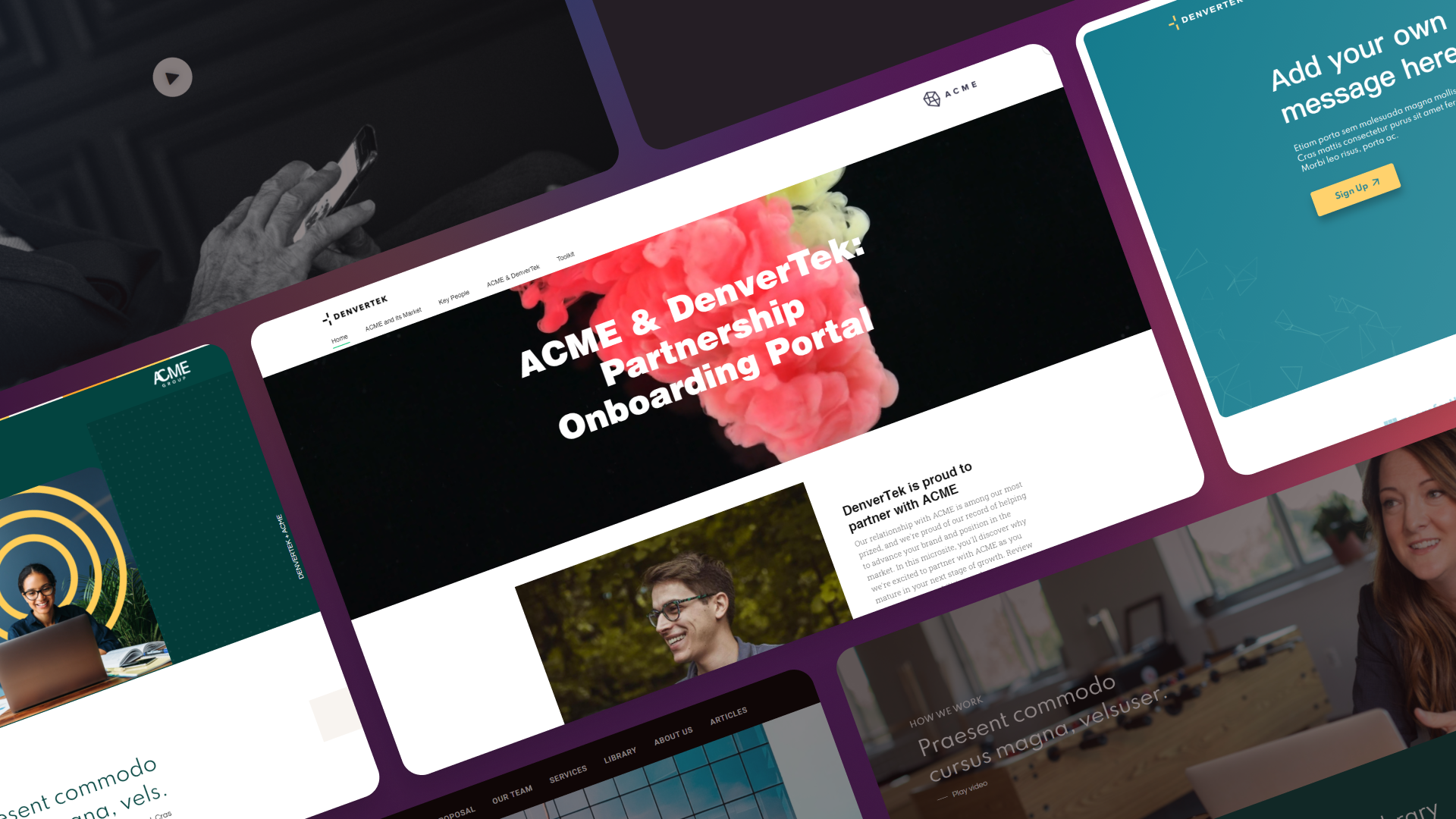
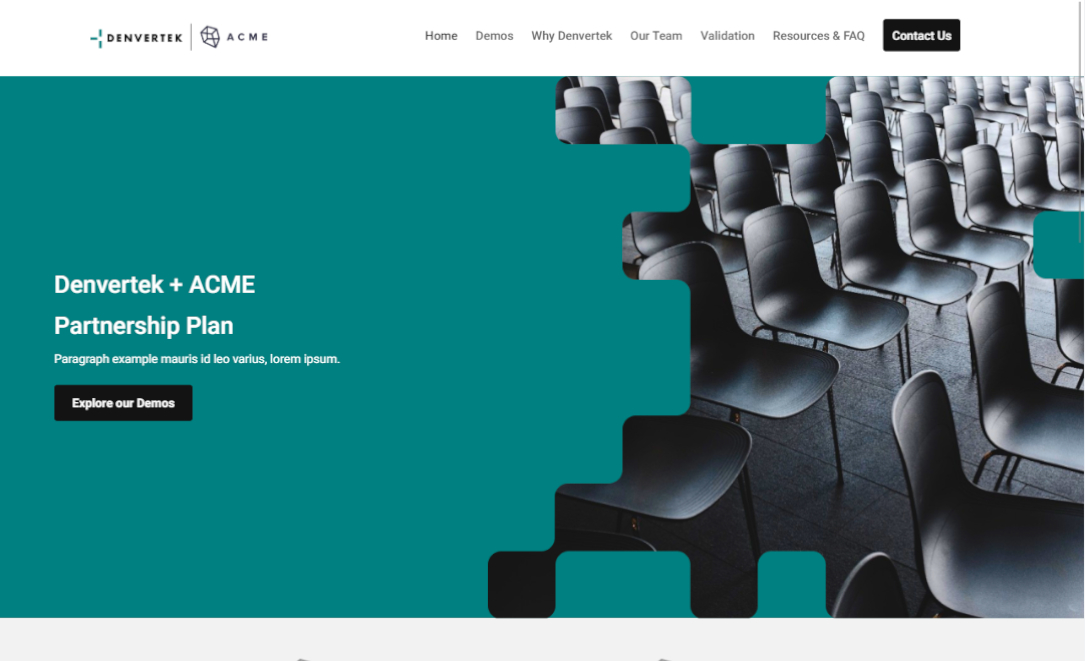
Curious to see an example of a presales microsite? https://share.zoomforth.com/presales-microsite-example
Ready to give your presales team a sharper way to convey value? Request a demo.
Empower your teams to build stunning, trackable microsites with Zoomforth.
Frequently asked questions
What is a presales microsite?
A presales microsite is a personalized, trackable web page that a presales team builds for a specific prospect or buying committee. It replaces static decks and PDF attachments with an interactive hub that houses a pre-demo teaser, a post-demo recap, supporting resources, and analytics that show exactly how each stakeholder engaged with the content.
How do presales teams use microsites before and after a demo?
Before the demo, a presales team uses a microsite to set context: a short video, an agenda, and background on the use cases the demo will cover. After the demo, the same microsite becomes a recap hub, hosting the recording, the slides, answers to open questions, and case studies, so prospects and their colleagues can revisit the material without waiting on a follow-up email.
How do microsites help presales teams create internal champions?
A microsite gives a champion a single, well-organized link to forward to colleagues instead of a scattered email thread or a generic slide deck. Because the content is structured by stakeholder concern and tracked, the champion can present a coherent case internally, and the presales team can see which sections stakeholders actually reviewed before the next call.