
A content experience platform is software that helps B2B teams create, host, share, and measure interactive digital content for buyer-facing use cases. It replaces static PDF proposals, slide decks, and document attachments with microsites that include per-visitor analytics, access controls, and the ability to update content after sharing.
B2B buyers today expect more than a PDF attached to an email. They want content that is easy to access on any device, personalized to their needs, and secure enough for enterprise procurement. A content experience platform delivers exactly that — and gives sellers the visibility they need to follow up at the right moment.
Ready to see how it works? Request a demo of Zoomforth or explore the content experience platform guide.
Ready to go digital?
Discover how Zoomforth can help you.
Join 500+ enterprise sales, marketing and HR teams building trackable microsites — no developer needed.
Rated 4.5/5 on G2 · Trusted by Fortune 500 teams
What is a content experience platform?
A content experience platform (or CEP) is a purpose-built solution for creating and distributing interactive, trackable content experiences — typically microsites — to external audiences. Unlike a CMS that manages public website content for broad audiences, a CEP is designed for one-to-one or one-to-few scenarios where personalization and measurement matter.
Common use cases include:
- Sales proposals sent to individual buyers with per-visitor tracking
- Client onboarding portals that centralize training, documentation, and welcome materials
- ABM microsites personalized for specific target accounts
- RFP response hubs that present qualifications, case studies, and pricing in one link
- Recruiting campaigns for executive candidates
- Event follow-up with personalized content for attendees
Why B2B teams are moving from PDFs to content experience platforms
The shift from static documents to interactive content experiences is driven by three factors:
Buyers expect a different experience
Enterprise buyers are accustomed to consumer-grade digital experiences in their personal lives. When a sales proposal arrives as a static PDF attachment, it feels dated before it is opened. A microsite-based experience keeps buyers engaged, lets them navigate in their own order, and works on any device.
Sellers need visibility
When a proposal is sent as a PDF, the seller has no idea whether it was opened, which sections the buyer read, or whether it was forwarded to a colleague. A content experience platform provides per-visitor analytics: who viewed the content, for how long, on which device, and which sections they spent the most time on.
Security requirements are tightening
Enterprise procurement teams increasingly require SOC 2 Type II certification, SSO/SAML integration, MFA, and per-site access controls. A content experience platform provides these as standard features — unlike sharing documents via email, cloud storage, or consumer-grade tools.
Key capabilities of a content experience platform
No-code editor for non-designers
A content experience platform should let anyone on the team create polished, branded microsites without design or development skills. Drag-and-drop editors, pre-built templates, and intuitive formatting make it possible for sales reps, recruiters, and customer success managers to build content in hours, not days.
Brand governance at scale
For enterprise teams, brand consistency is non-negotiable. A content experience platform enforces fonts, colors, and layouts automatically so every piece of content produced by every team member is on-brand without a manual review step.
Per-visitor engagement analytics
This is the feature that most consistently drives the switch from static documents. A content experience platform shows who opened a microsite, which sections they read, how long they spent on each section, what device they used, and whether they shared the link internally. Sales teams use this data to prioritize follow-up and tailor their conversation based on what the buyer already reviewed.
Enterprise security
Security features should include SOC 2 Type II certification, GDPR and CCPA compliance, and multiple access control options: public, password, email authentication, MFA, and SSO/SAML. These are table stakes for enterprise procurement teams.
Live content updates
Once a static document is sent, it cannot be updated without resending a new version. A content experience platform lets teams update content in place — the same link always shows the latest version, so buyers always have the most current information.
Multi-use-case coverage
Enterprise organizations typically need one platform that serves multiple teams: sales proposals, marketing microsites, client onboarding portals, recruiting campaigns, and HR communications. A single platform with a single enterprise agreement is more efficient than managing separate tools for each team.
How to evaluate a content experience platform
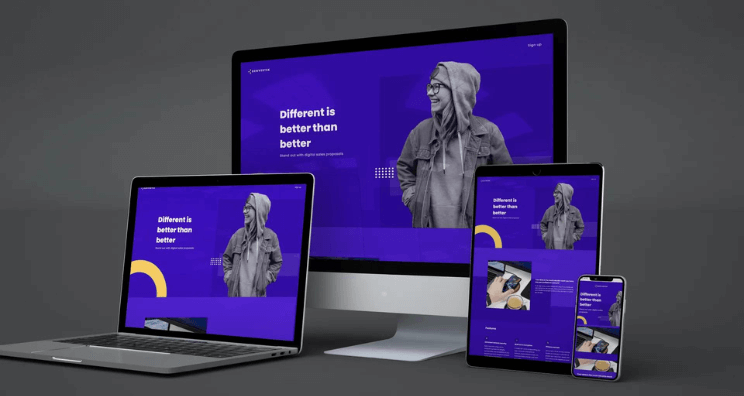
When evaluating content experience platforms, prioritize these criteria:
Who creates the content? If designers or developers are required to produce each piece of content, the platform does not scale for enterprise teams. Look for a no-code solution that empowers non-technical team members.
What happens after you share? Can you see who viewed the content, what they read, for how long, and whether they shared it? If the answer is no, the platform does not provide the intelligence modern sales teams need.
How is brand compliance enforced? Are fonts, colors, and layouts locked at the theme level, or can team members deviate from brand guidelines? For enterprise teams, hard brand guardrails are essential.
Can content be updated after sharing? If a static document needs a correction, it must be re-exported and re-sent. A content experience platform should allow live updates that take effect immediately on the same link.
What security certifications are in place? SOC 2 Type II, GDPR, CCPA, and per-site access controls should be standard — not sold as add-ons.
Content experience platform vs CMS vs proposal tool
| Capability | Content experience platform | Traditional CMS | Proposal tool |
|---|---|---|---|
| Per-visitor analytics | Yes | No (page-level only) | Limited |
| One-to-one personalization | Native | Requires customization | Basic |
| Brand governance | Enforced at theme level | Manual | Soft guardrails |
| Security (SOC 2, SSO, MFA) | Included | Varies | Limited |
| Content updates after send | Live via same link | Not applicable | Re-export required |
| Multi-use-case (sales, HR, marketing) | Single platform | Website only | Proposals only |
How content experience platforms drive buyer engagement
The return on a content experience platform comes from three measurable outcomes:
Faster deal cycles. When buyers can access all relevant content in one secure link, they spend less time searching for information and more time evaluating the proposal. Sales teams that use analytics to time their follow-up see shorter cycle times.
Higher win rates. Personalized, interactive content experiences differentiate sellers in competitive bids. Buyers who feel understood and receive content that addresses their specific needs are more likely to choose that vendor.
Better post-sale retention. Client onboarding portals, training microsites, and ongoing communication hubs reduce time-to-value for new customers. Clients who reach their first success milestone quickly are more likely to renew and expand.
Ready to evaluate a content experience platform?
Zoomforth is a content experience platform built for enterprise teams that create high-stakes buyer-facing content. Sales proposals, RFP responses, client onboarding portals, ABM microsites, and recruiting campaigns — all built, hosted, and measured on one platform.
Explore the content experience platform guide for a deeper walkthrough, or request a demo to see Zoomforth in action.
Frequently asked questions
What is a content experience platform?
A content experience platform is software that lets B2B teams create, host, share, and measure interactive digital content for buyers, clients, and stakeholders. It replaces static PDFs and slide decks with trackable microsites, personalized portals, and real-time engagement analytics.
What is the difference between a content experience platform and a CMS?
A CMS manages public-facing website content for broad audiences. A content experience platform is built for one-to-one or one-to-few content — sales proposals, client portals, onboarding hubs, and ABM microsites — with visitor-level analytics, access controls, and personalized delivery.
When does a team need a content experience platform?
Teams typically invest in a content experience platform when they send high-stakes content to external buyers, need visibility into whether that content was opened and read, and can no longer rely on PDF attachments or email as their primary delivery method.
What features should I look for in a content experience platform?
Key features include a no-code editor for non-designers, branded templates with enforced brand governance, per-visitor engagement analytics, enterprise security (SOC 2, SSO, MFA), and the ability to update content after sharing without resending a new link.
How does a content experience platform improve buyer engagement?
It improves engagement by letting buyers consume content on their own terms — on any device, in any order, with video, documents, and interactive elements in one link. For sellers, real-time analytics show which sections the buyer read, for how long, and whether they shared it internally.